
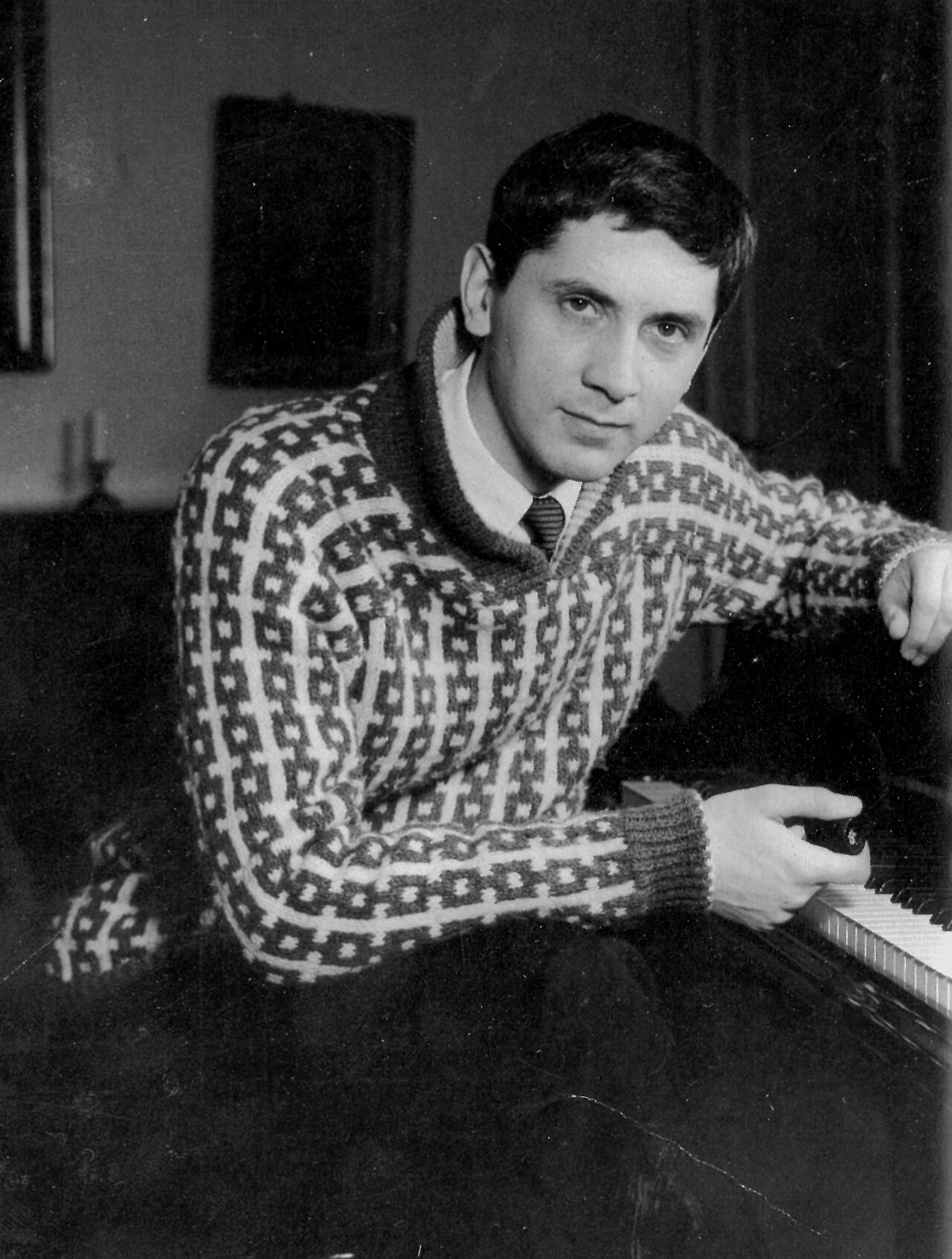
His father was an opera singer and a founder of Finland's national opera; his mother was a doctor. Einojuhani Rautavaara, the Finnish classical composer born on 9 October 1928, did not begin formal piano lessons until he was 17. By then he had already lost both parents, the people who might have been expected to give a musical child an early start. Instead of a prodigy's beginning, his story starts with a delay. That delay is the real subject of this portrait. And the delay begins in loss, not laziness.
Instead of a prodigy's beginning, his story starts with a delay.
His father died when Einojuhani was ten, and his mother died not long afterward. The orphaned boy moved in with an aunt. He had grown up around a father who sang opera, but formal piano lessons were not part of that new home. When they did begin, at 17, they arrived after a long silence. The loss removed the obvious guides who might have introduced him to a musical education much earlier, and that gap could have closed the door on a composing career before it opened. What remained was a boy with a family connection to music but no direct route into it.
Sibelius Academy years
Rautavaara studied at the Sibelius Academy from 1948 to 1952. The academy gave him a foundation in the craft. He entered as a late starter, but he left with the tools of a working composer. The years at the academy connected him to Finland's musical establishment. The formal training he had started so late now had an institutional shape. That training mattered because the next step would depend on a decisive recommendation.
The decisive break came in 1954, when Rautavaara won a composing contest with A Requiem in Our Time. The win was more than a prize; it placed Rautavaara in front of Jean Sibelius, the composer whose name the Sibelius Academy bore. Sibelius recommended Rautavaara for a scholarship to the Juilliard School. A late starter suddenly had the backing of the country's most important composer. That backing turned a promising student into a composer with an international path.
Serialism and controversy in Finland
At the Juilliard School, Rautavaara studied with the composer Vincent Persichetti and took lessons from the composer Aaron Copland. He returned to Finland carrying a technique that was still rare there. Together with the composer Erik Bergman, he became a pioneer of serial technique in Finnish music. Serial writing was unusual in Finland, and it made Rautavaara a controversial figure. The late starter had become a rule-breaker. The same audience that might have doubted a late starter now had stronger reasons to argue about him.
That controversy did not stay outside him. Rautavaara eventually went through a creative crisis over serialism and abandoned it. He walked away from the method that had made him controversial. The break redirected him toward a long list of symphonies, operas and concertos. He did not stop writing; he changed the terms of his writing, and the crisis became a hinge rather than an ending. The same man who began piano at 17 had found a new way to write.
From that later period came the Seventh Symphony, Angel of Light, in 1994, the best-known work in that long list. A recording of Angel of Light was nominated for a Grammy. The title became closely associated with his name. That nomination brought his music to listeners far beyond Finland. It also confirmed that the crisis over serialism had not ended his capacity to surprise. The work came after a long search, not as a sudden accident.
Decades after the late piano lessons, Finland repaid the risk. In 2004 Rautavaara suffered a serious illness and spent a long stretch in intensive care. After that, the Finnish government appointed him artistic professor and paid him only to compose music. The orphan who started formal lessons at 17 had become a composer the state wanted to keep writing. That arrangement made the late start seem less like a handicap and more like the opening of a long, improbable career. It was a recognition built on decades of work.