
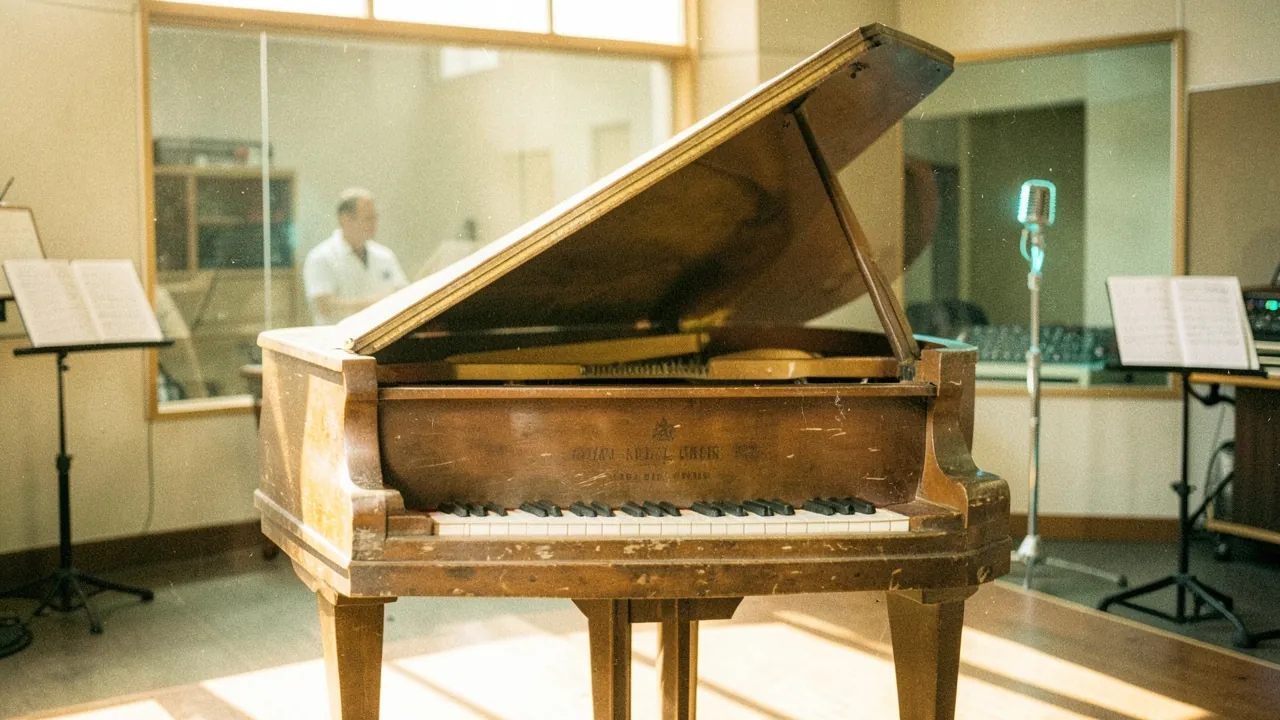
In a Havana studio in January 1964, a young pianist named Chucho Valdés sat down to lead his first recording sessions. He was twenty-two, born Dionisio Jesús Valdés Rodríguez in the small town of Quivicán, and already carrying a family name that meant something in Cuban music. His father, Bebo Valdés, had been one of the island's most celebrated pianists and the leader of the orchestra at the Tropicana nightclub. But by then Bebo had been gone for four years, having left Cuba in 1960, and he would not record music again until the 1990s. Chucho was not just starting a career; he was stepping into a silence. Chucho Valdés was born on October 9, 1941.
Chucho was not just starting a career; he was stepping into a silence.
From his father's shadow to his own sound
Chucho Valdés is a Cuban pianist, composer, arranger and bandleader whose career now spans more than fifty years. He grew up in the shadow of his father's reputation, but he did not try to copy it. Instead he built his own sound from the ground up, first as one of the founders of the Orquesta Cubana de Música Moderna, a big band that accompanied singers like Elena Burke and Omara Portuondo. The orchestra gave him a laboratory, but it was not enough. He wanted a group that could move faster and take more risks.
The break came in 1973, when Chucho and other musicians from that orchestra formed Irakere. The name alone announced the ambition: a Cuban word for a sacred forest, a place where spirits gather. Irakere fused songo, a Cuban rhythm style, with Afro-Cuban jazz, and it became one of the most famous Latin jazz groups ever to come out of Cuba. The band won a Grammy in 1980 for its self-titled album, and suddenly the son of Bebo Valdés was no longer just Bebo's son. He was the leader of a movement.
Recording with Bebo at last
Yet Chucho kept one eye on the past. His father had vanished from recording studios for three decades, and the two men rarely made music together until late in Bebo's life. When they finally did, the result was Juntos Para Siempre, an album that won a Grammy in 2011 and a Latin Grammy in 2009. The title means 'Together Forever,' and it closed a circle that had been broken since 1960. Bebo died in 2013, but by then the reconciliation was on record.
Chucho's own catalogue kept expanding in every direction. He signed with Blue Note Records, which gave him international reach, and in the late 1990s he focused more on solo work. Albums like Live at the Village Vanguard, recorded in 2000, brought him a Grammy in 2001. He also led the Afro-Cuban Messengers from 2010 onward, a group that carried the Irakere spirit into a new decade. Critics began to place him alongside Gonzalo Rubalcaba as one of the greatest Cuban jazz pianists.
The awards piled up, but they never became the point. A Grammy for Chucho's Steps in 2011, another for Tribute to Irakere: Live in Marciac in 2017, a Latin Grammy for Jazz Batá 2 in 2019. In 2022 he shared a Grammy for Mirror Mirror with Eliane Elias and Chick Corea. Berklee College of Music gave him an honorary doctorate in 2011. In 2025 he received the Leonard Bernstein Award and was named an NEA Jazz Master. The list is long, but the story behind it is short: a boy from Quivicán refused to let his father's silence be the last word.
Today Chucho Valdés is eighty-five, and he still spends much of his time teaching young musicians, as he did at the Havana National School. His son Chuchito became a pianist too, and for a time replaced him as pianist and leader of Irakere. The family line that Bebo started at the Tropicana, and that Chucho rebuilt from scratch, now runs through another generation. The forest that gave Irakere its name is still growing.