
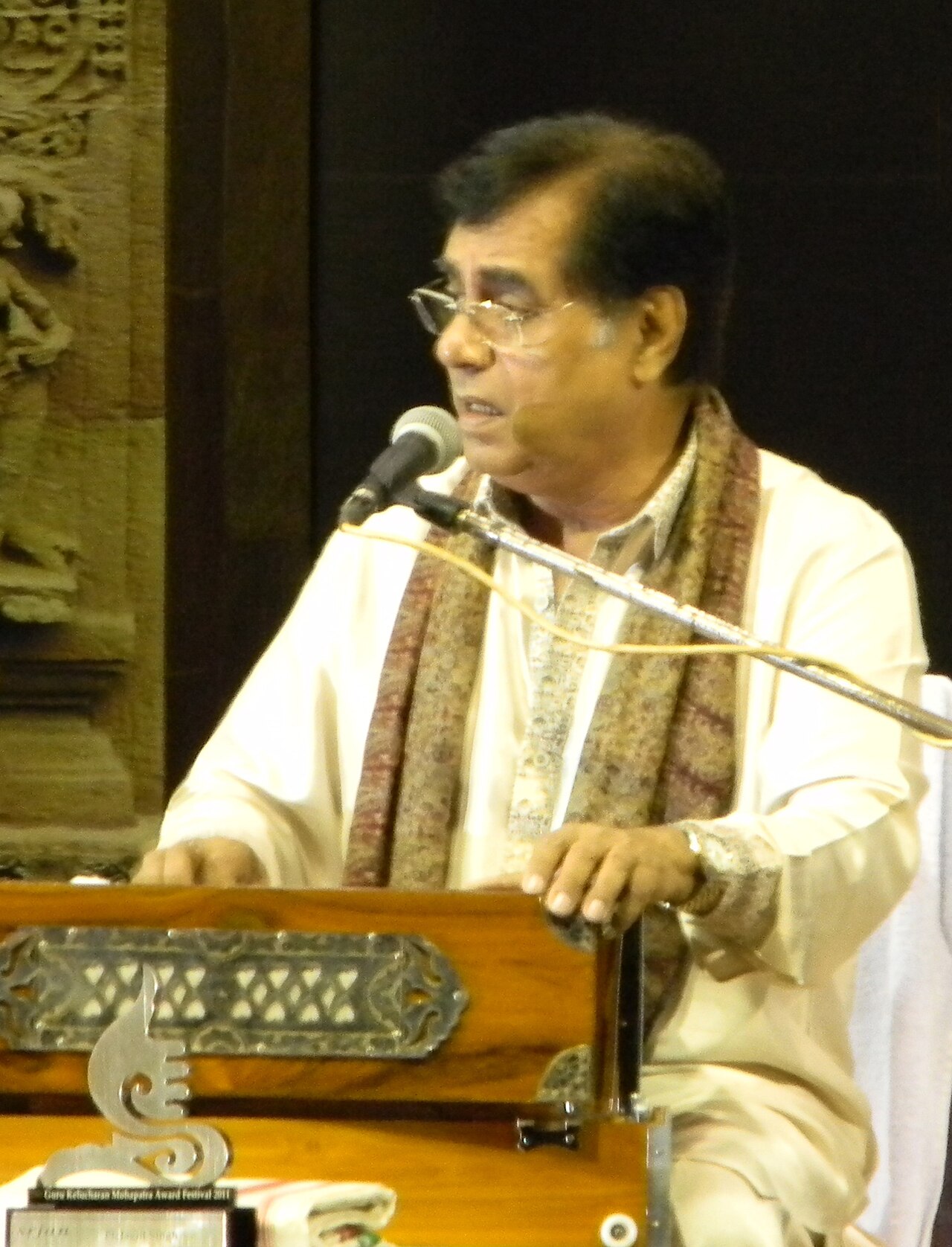
The album was called The Unforgettable, and for once the title was not marketing. When Jagjit Singh and Chitra Singh released it in 1977, the Indian music industry had no obvious slot for a husband-and-wife duo singing ghazals with western instruments and simple, direct poetry. The record sold beyond anyone's expectation, and one song, "Baat Niklegi," became the kind of hit that follows a singer for life. The man behind it had arrived in Bombay in 1965 without telling his family, sung advertising jingles to survive, and met Chitra Dutta two years later. She divorced her first husband, and they married in December 1969. Jagjit Singh died on October 10, 2011.
From Jalandhar to Bombay
Jagjit Singh was born Jagmohan Singh Dhiman on 8 February 1941 in Sri Ganganagar, then British India. He grew up in a Punjabi Sikh family and began his professional career in 1961 at All India Radio in Jalandhar, singing and composing. But the move to Bombay changed everything. He and Chitra started performing as a duo after the birth of their son Vivek, and The Unforgettable gave them a formula: ten tracks, two sung together, the rest split evenly between them. Jagjit Singh said he wanted to refine the ghazal by choosing simple verses and simple melodies, and he brought western instruments into the sound.
Through the 1970s the duo kept recording, and in the 1980s their best-selling album was The Latest, built on poems by Sudarshan Faakir. One track from it, "Woh Kagaz ki Kashti...Woh Baarish ka Paani," became a lifelong hit. The music was elegant, unhurried, and easy to understand, which made it radical in a genre often associated with classical density. Jagjit Singh was not trying to impress connoisseurs; he was trying to make ghazals feel like something a family could play at home. That instinct made him one of the most recognizable voices in Indian music, and it also made the silence that followed much harder.
Jagjit Singh was not trying to impress connoisseurs; he was trying to make ghazals feel like something a family could play at home.
Vivek's death and the silence
In 1990 their 20-year-old son Vivek died in a car accident. Chitra Singh announced she was leaving music and never sang or recorded again. Jagjit Singh returned to performing after a year, but he was suffering from deep depression. The duo that had defined a genre simply stopped existing. He kept working, and his album Beyond Time, released in 1987, had already made history as the first digital release in India. But the personal cost of 1990 shadowed everything he did afterward, even as he rebuilt a solo career that took him to stages around the world.
The honors piled up in the years that followed. In 2003 the Indian government awarded him the Padma Bhushan. In 2007 he performed the ghazal "Lagta Nahin Hai Dil Mera" by Bahadur Shah Zafar in the Central Hall of the Indian Parliament to mark 150 years since the uprising of 1857. The choice of venue and poem said something about his place in the culture: a singer of love songs and loss, standing where laws are made, singing words written by a deposed emperor. He had become a national figure, not just a popular one.
In 2011, for his 70th birthday, Jagjit Singh gave 70 concerts around the world. The schedule was punishing, and on 23 September that year he suffered a brain hemorrhage and fell into a coma for more than two weeks. He died on 10 October 2011 at Lilavati Hospital in Mumbai. Fifteen years on, the anniversary brings back not only the voice but the strange shape of his career: a man who lost his son, lost his musical partner, and still kept singing until the very end.