
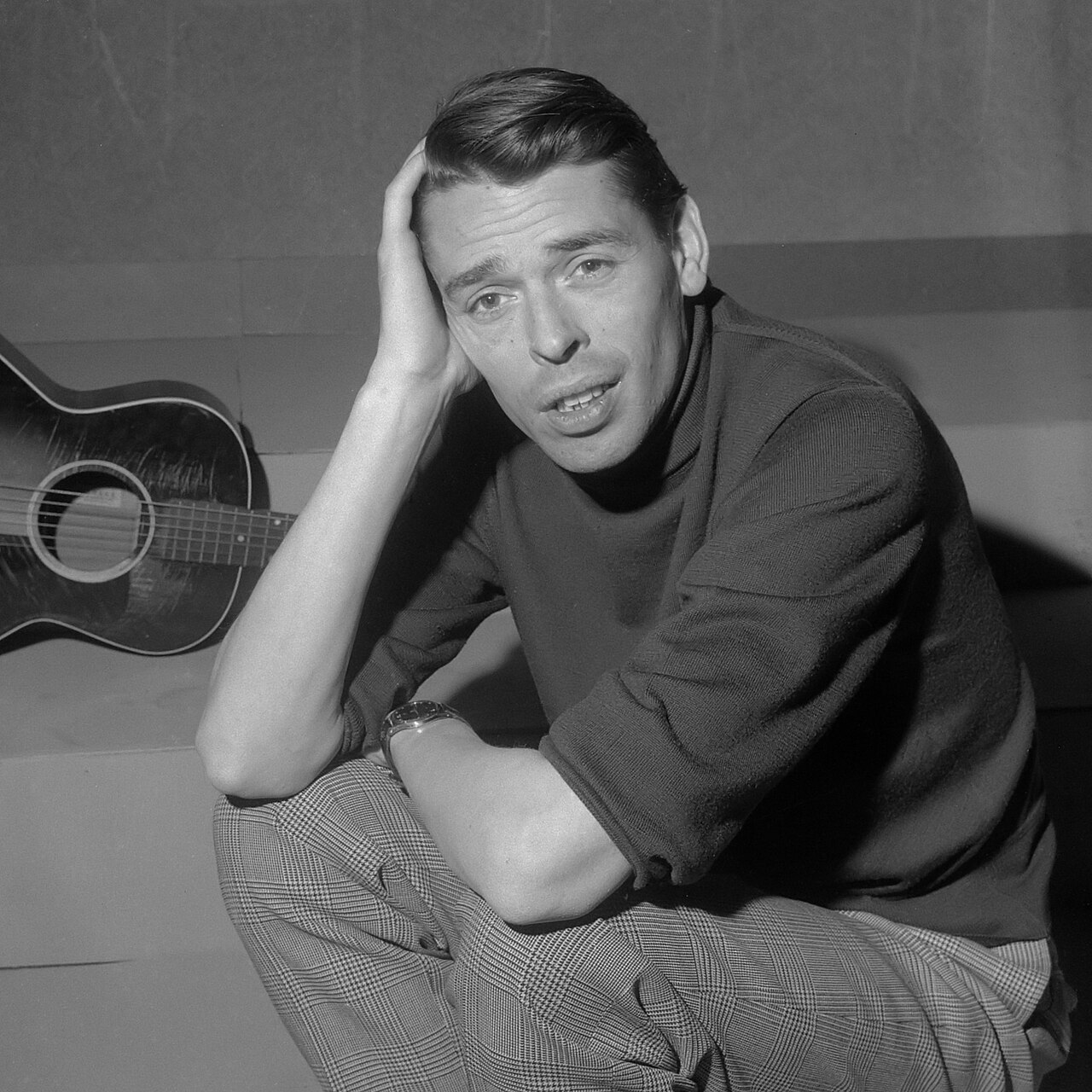
Jacques Brel stopped singing when audiences wanted him most, and his grave lies in the Pacific beside Paul Gauguin. Jacques Brel was a Belgian French-language poet, singer, actor and director who died on 9 October 1978 at the age of 49. By then he had already left the stage, moved into film, and written a final album in French Polynesia. Few performers have walked away from a career at such a pitch, and fewer still did it so completely. That habit of refusing the obvious path is the thread of this story.
Family business versus the stage
School did not impress Jacques Brel, but amateur shows did from an early age. Jacques Brel's father worked in import-export and later helped run a company making cardboard products. That father pushed Jacques into the family business, though Jacques had no taste for it. The stage, not the office, had the stronger pull. This early tension between duty and performance never quite left Jacques Brel. Jacques Brel kept choosing the stage over the desk.
Jacques Brel left for Paris on an invitation from Jacques Canetti. The move was not an immediate triumph; what made Jacques Brel popular was touring. Jacques Brel played sold-out concerts on tour, proof that his voice crossed borders. The road, not the recording studio, built his name. It also built a following that soon made the next decision look reckless. Jacques Canetti had seen something worth backing.
Walking away at the peak
In 1966, at the peak of that success, Jacques Brel decided to leave singing and the stage. Jacques Brel's last concert took place on 16 May 1967 in Roubaix. Jacques Brel did not wait for his popularity to fade or for audiences to drift away. Instead, Jacques Brel shut down the live act that had made him famous, a rare move for a performer at the height of his powers. The decision was a clean cut, not a slow retreat, and it left no obvious next step. For a live artist, this was a gamble with no safety net.
Jacques Brel did not wait for his popularity to fade or for audiences to drift away.
Jacques Brel moved into film as an actor. Jacques Brel's debut came in André Cayatte's 'Professional Risk', where he played a teacher accused of rape by a pupil. The role was far from the singing stage, and it showed another side of his intensity. Jacques Brel also directed films, so the camera became a second stage. That turn kept him in front of audiences, but without the songs. It was a different kind of performance, built on character rather than song, and it proved the poet could hold a screen.
Before moving away from Europe, Jacques Brel learned to fly and bought a yacht. From November 1975 Jacques Brel settled in French Polynesia. The title of his last album, 'Les Marquises', matched the islands where the songs were written. Jacques Brel recorded the album in Paris with one lung, a physical fact that made the work all the more startling. Paris was only a stop, not a return to the old life. Jacques Brel had not stopped making things; he had simply taken the stage out of the centre.
On 9 October 1978 Jacques Brel died far from the islands he had chosen. The cause was a pulmonary embolism. Jacques Brel was buried in a cemetery on the Marquesas Islands, in French Polynesia, next to Paul Gauguin. Jacques Brel was not buried in the country where he was born, but on the islands that gave his last album its name. Jacques Brel rests beside Paul Gauguin on the Marquesas Islands.