
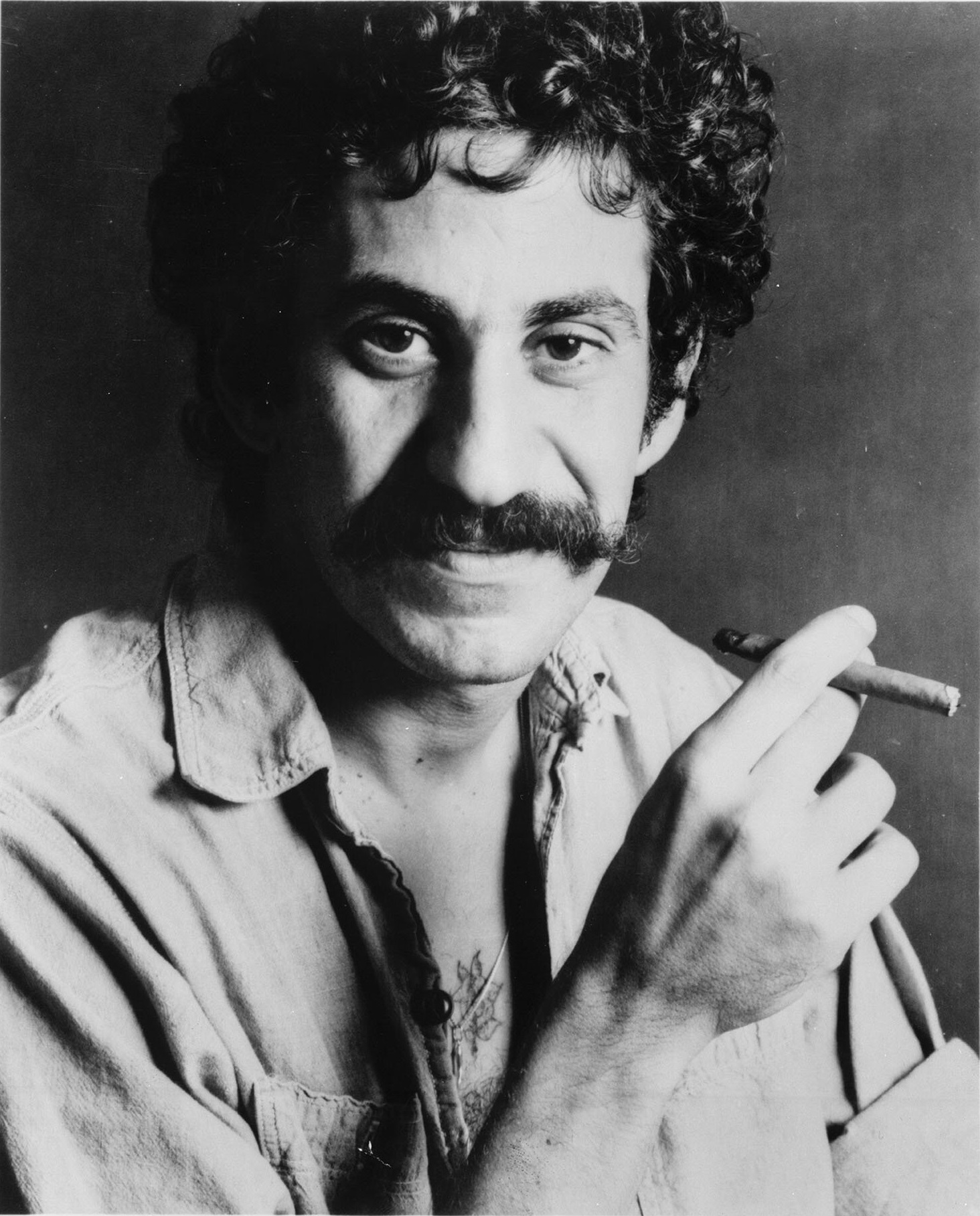
Five hundred dollars bought a dream, and a family hoped it would buy silence. Jim Croce's parents financed his first album, Facets, with wedding gift money, expecting the failure to steer their son toward a sensible career. Instead, every copy sold. That small victory in 1966 set a pattern: the Philadelphia-born songwriter kept turning modest means into something people actually wanted to hear. Born in 1943 to Italian American parents whose ancestors came from Abruzzo, Croce grew up in Drexel Hill and graduated from Upper Darby High School in 1960. He studied psychology and German at Villanova University, sang with the Villanova Singers and the Villanova Spires, and worked as a student DJ on WKVU radio.
Early years and the road duo
The Coventry Lads was the name the Villanova Spires used for off-campus gigs, an early hint that Croce understood the value of a good alias. He met Ingrid Jacobson on November 29, 1963, at a Philadelphia competition, and by 1965 he held a bachelor's degree in social sciences. The couple married in 1966, the same year Croce converted from Catholicism to Judaism and joined the National Guard to avoid being drafted for Vietnam. Basic training happened twice because Croce pushed back against authority figures. From the mid-1960s onward, he and Ingrid performed as a duo, covering songs by Ian and Sylvia, Gordon Lightfoot, Joan Baez, and Arlo Guthrie.
Producer Tommy West convinced Croce to move to New York in 1968, and Capitol Records released the album Jim & Ingrid Croce. The duo logged more than 300,000 miles over two years, playing clubs and college campuses across the country. The road wore them down. Disillusioned with the music business, they sold every guitar except one and returned to Pennsylvania, settling in Lyndell. Croce took whatever work he could find: driving trucks, working construction, playing for 25 dollars a night. The bars and truck stops supplied something more valuable than wages. Croce started writing songs about the characters he met in those places.
The breakthrough with ABC Records
A meeting in 1970 changed the trajectory. Producer Joe Salviuolo introduced Croce to guitarist Maury Muehleisen, and initially Croce played backup for Muehleisen. The roles reversed as Croce's songs took shape. The birth of his son A.J. in September 1971 forced a decision: music would become the profession, not a side pursuit. Croce signed a three-album deal with ABC Records in 1972 and moved to San Diego. The album You Don't Mess Around with Jim delivered three hits, including the song Time in a Bottle. That same year Croce made his television debut on American Bandstand in August.
By February 1973, Croce and Muehleisen were touring Europe, with stops in London, Paris, and Amsterdam. The momentum kept building. In July 1973, the single Bad, Bad Leroy Brown reached number one on the American charts. Croce finished recording the album I Got a Name one week before his death. He was already planning an exit from performing, imagining a future writing short stories and screenplays instead. The songs he left behind suggest a writer's eye for detail: truck stop regulars, barroom gamblers, working men with nicknames and grudges. Croce captured them in compact verses that sounded like letters sent from the road.
The crash and its aftermath
On September 20, 1973, Croce performed at Northwestern State University in Louisiana. An hour after the concert ended, a Beechcraft E18S crashed just after takeoff from Natchitoches airport. Croce and five others died in the wreckage. Among the dead were Maury Muehleisen, manager Kenneth Cortese, and road manager Dennis Rast. The NTSB investigation pointed to pilot error as the cause. The pilot was 57 years old and had run three miles to the airport before the flight. Investigators later found he suffered from coronary artery disease. The physical strain and the medical condition created a fatal combination.
Croce was buried at Haym Salomon Memorial Park in Frazer, Pennsylvania. The album I Got a Name appeared posthumously on December 1, 1973. Time in a Bottle climbed to number one after his death, a bittersweet chart-topper for a song about wanting more time. The irony cuts deep: Croce wrote about mortality and the preciousness of moments, then lost his own life at the height of his success. The songwriter who planned to leave music behind became permanently defined by the songs he never got to outgrow.
The irony cuts deep: Croce wrote about mortality and the preciousness of moments, then lost his own life at the height of his success.
The Songwriters Hall of Fame inducted Croce in 1990, recognizing a catalog built in roughly a decade of writing and performing. Pennsylvania installed a historical marker in his honor in 2022, four years before the current year of 2026. Fifty-three years have passed since the crash, and the songs still circulate on vinyl, in streaming playlists, and in the memories of listeners who first heard them on AM radio. Bad, Bad Leroy Brown remains a jukebox staple, while Time in a Bottle gets rediscovered by each generation that stumbles onto its quiet desperation.
The first pressing of I Got a Name carries the weight of an ending Croce never saw coming. ABC Records shipped the album after the funeral, after the investigation, after the headlines faded. The cover shows Croce smiling, mid-stride, a man who had already decided to walk away from the spotlight. He wanted to write stories and screenplays, to trade tour buses for a desk. Instead, his final recordings became the story. The truck driver from Lyndell, the college DJ from Villanova, the songwriter who sold every guitar but one — Jim Croce left behind a catalog that still sounds like someone writing home from a place he never quite reached.