
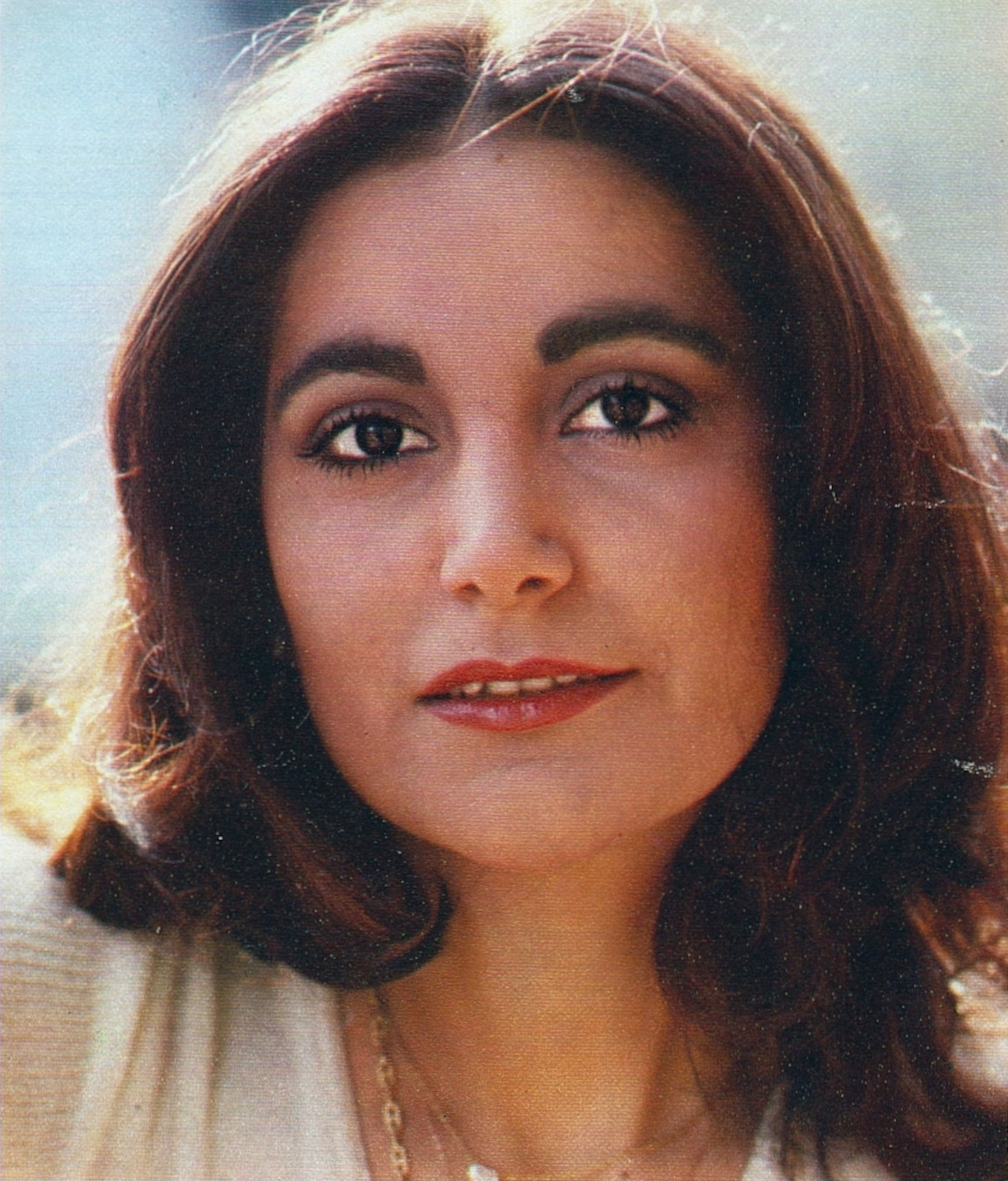
A teacher of Latin and Greek raised a daughter whose voice would dismantle every rule of Italian pop restraint. Giuseppe Radames Berté expected syntax and declensions; instead, Domenica Rita Adriana Berté—born in Bagnara Calabra, Calabria, on September 20, 1947—turned syllables into open wounds. Her mother, Maria Salvina Dato, taught elementary school. Three sisters filled the house: Leda, Loredana, Olivia. Somewhere in that provincial classroom of expectations, a girl decided she would not recite—she would confess. By 1963, the name Mia Martini existed.
The stage name arrived before the fame, but the voice needed no introduction once it landed. Mia Martini took the Italian pop scene of the 1970s and bent it around her phrasing. Festivalbar crowned her in 1972 and again in 1973—still the only woman to win that competition two years running. 'Piccolo uomo' became a hit. So did 'Donna sola' and 'Minuetto'. These were not polite love songs; they were interrogations of affection, delivered with an intensity that made other singers sound like they were merely visiting the material.
The debut that recalibrated expectations
Her debut album, 'Oltre la collina', arrived on RCA Italiana and immediately recalibrated what an Italian woman could do on record. The track 'Padre davvero' announced a songwriter's instincts wrapped in a performer's nerve. Critics later ranked the album among the finest ever recorded by an Italian woman. The studio albums that followed—'Nel mondo, una cosa' in 1972, 'Il giorno dopo' in 1973, 'È proprio come vivere' in 1974, 'Sensi e controsensi' in 1975—documented a voice growing more assured, more dangerous, more willing to hold a note until it shattered.
By the late 1970s, Martini was one of the most popular Italian performers alive. Then came a pivot that would define her international profile. In 1977, she entered Eurovision with 'Libera' and finished thirteenth with thirty-three points. The placement looked modest on paper, but the same year she began collaborating with Charles Aznavour. She also started an artistic and romantic partnership with Ivano Fossati. Two men, two different gravitational fields, one singer pulling both into her orbit while the rest of Europe tried to figure out where she belonged.
Eurovision returns and accumulating hits
The Eurovision return in 1992 told a different story. 'Rapsodia' finished fourth with one hundred eleven points—a leap that reflected not just a stronger song but a performer who had survived the industry's fickle appetites. Hits kept accumulating: 'Inno', 'Al mondo', 'Che vuoi che sia se t'ho aspettato tanto', 'Per amarti', 'La costruzione di un amore'. Each title reads like a chapter heading in a memoir written in real time. Martini didn't perform songs; she inhabited them, and the distinction became her signature.
The voice was the instrument, but the woman behind it carried the weight of every interpretation. Her father's classical languages gave her a sense of structure; her mother's elementary classroom gave her patience. Four daughters, each finding a different exit from Bagnara Calabra. Leda arrived in 1945, Loredana in 1950, Olivia in 1957. The spacing of those years—five, seven—suggests a household where music competed with lesson plans for airtime. Mia Martini emerged as the one who understood that a song could be both lesson and confession.
The silence after the final note
The end came without ceremony. Martini died in Cardano al Campo, Lombardy, on May 12, 1995, though she likely passed the day before. She was forty-seven. The cause was a drug overdose. Three days passed before anyone found her. That detail—the silence between the last breath and the discovery—haunts every subsequent listen to her catalog. A voice that had filled arenas, that had won Festivalbar twice, that had carried 'Libera' and 'Rapsodia' across European television screens, went quiet in a room where no one noticed for seventy-two hours.
This September would mark seventy-nine years since her birth. The anniversary lands differently now, three decades after her death. Her records remain in circulation, the RCA Italiana pressings from the early 1970s carrying the warmth of analog tape and the slight crackle that Italian vinyl of that era always had. 'Oltre la collina' still sounds like a debut that knew exactly what it was doing. 'Nel mondo, una cosa' still opens with a confidence that younger singers spend careers chasing.
What lingers is the interpretive intensity—the way Martini could take a simple phrase and make it sound like a verdict. 'Padre davvero' isn't a song about a father; it's a song about the distance between what a parent expects and what a daughter becomes. That gap, measured in the classical languages her father taught and the pop charts she conquered, was the space where Mia Martini lived. She didn't close it. She sang from inside it, and the echo has outlasted everyone who tried to explain her.
She didn't close it. She sang from inside it, and the echo has outlasted everyone who tried to explain her.
In the end, the numbers don't hold her. Thirteen at Eurovision in 1977, fourth in 1992, forty-seven years of life, three days before discovery. The arithmetic is brutal and insufficient. What remains is the sound of a woman from Calabria who turned a teacher's daughter's discipline into something wild. The records are still there, waiting on shelves, their grooves worn smooth by decades of listeners trying to get closer to whatever it was she understood.