
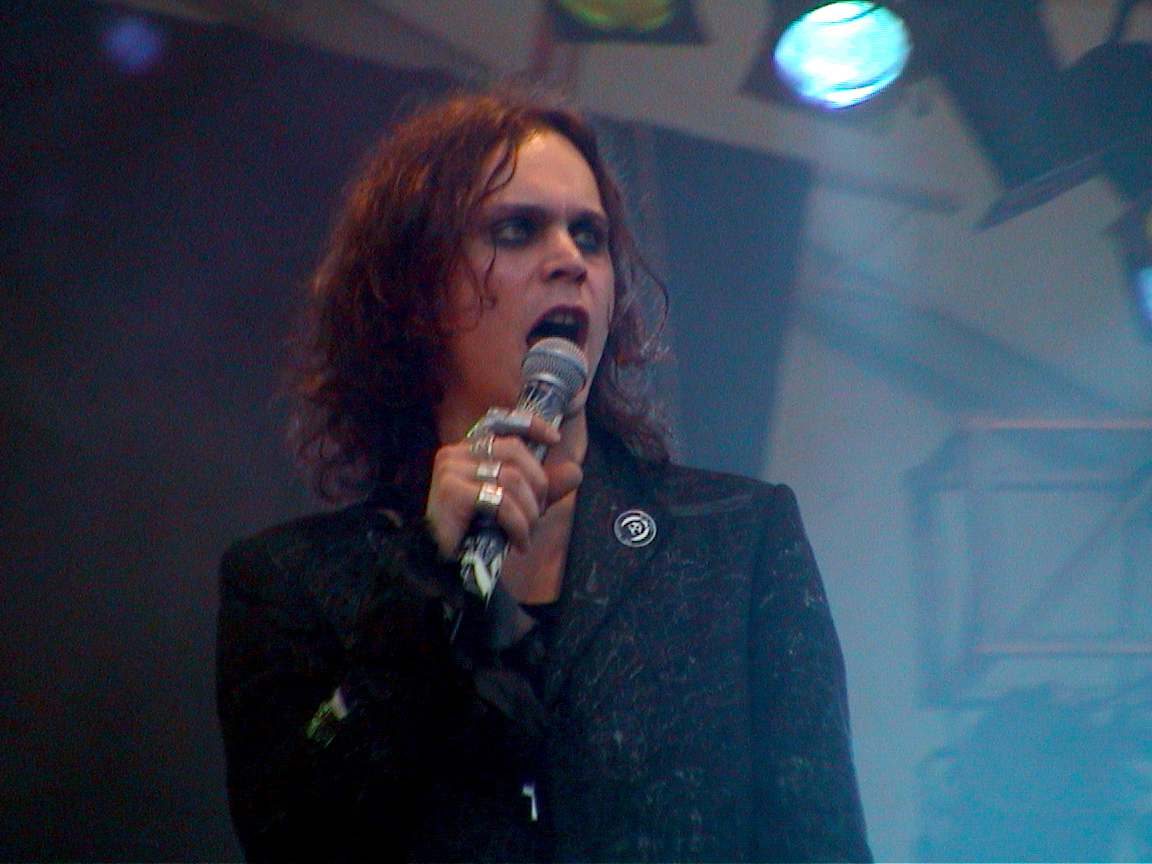
The song started as a dare disguised as a love letter. On July 11, 1998, at the Ilosaarirock festival in Finland, HIM singer Ville Valo tried out a new ballad that took its central question from Blue Öyster Cult's "Don't Fear the Reaper" and its doomed romance from Romeo and Juliet. The song wouldn't reach the public as a single until November 2, 1999, when it was released as "Join Me in Death." The live version even had an extra verse that never made it onto a studio recording.
Recording and release details
On November 2, 1999, HIM released that song as the single "Join Me in Death," credited to frontman Ville Valo and produced by John Fryer. It appeared on the second HIM album Razorblade Romance the following year. The title was also shortened to "Join Me" on some editions. The studio version ran three minutes and thirty-nine seconds, a compact length that kept the song's emotional pull tight. It was issued through Big Management Group Management and BMG, giving the single a strong push beyond Finland.
What Valo intended as a rock version of Romeo and Juliet was not what many listeners heard. The line "Would you die tonight for love?" led people to treat the song as an invitation to suicide. Valo later said he was accused of causing a person's death, and he rejected that reading. His point, he insisted, was the opposite: giving up everything for love.
Valo later said he was accused of causing a person's death, and he rejected that reading.
Chart positions across Europe
The storm around the lyric didn't hurt the single. In Finland it went to number one and sold 30,628 copies, enough for platinum status and a place among the fifteen best-selling singles in the country's history. Germany also put it at number one, and Austria certified it gold. The single also reached second place in Austria and eleventh on the Eurochart Hot 100. In Romania and Spain it climbed to fifteenth, while the Netherlands sent it to eighteenth. Italy placed it thirtieth, and Belgium's Flanders chart put it thirty-seventh.
The song's reach spread quickly across Europe. Switzerland sent it to eighth place, and the European Border Breakers chart placed it first. Four music videos were made for the single: three so-called lazer versions, two of which used scenes from the film The Thirteenth Floor, and a fourth, the ice version, which leaned into the Romeo and Juliet theme. The song also appeared in Bam Margera's skate video and in the game Tony Hawk's Underground. That crossover kept it alive beyond radio play, introducing it to audiences who might never have heard the single otherwise.
That film connection ran deeper than the videos. "Join Me" appeared in The Thirteenth Floor but was left off its soundtrack. The song later turned up in the soundtrack for the 2004 film Resident Evil: Apocalypse, carrying the same blend of gothic romance and misunderstanding into a new context.
The single's afterlife kept growing. A cover by the group Gregorian, recorded with Sarah Brightman for the album Masters of Chant: Chapter III, gave the song a choral reading that softened its edges. Another Gregorian version featured vocals by Amelia Brightman, and the Finnish single edition paired the title track with a live "Rebel Yell". The Gregorian cover with Sarah Brightman also appeared on the limited edition of her album The Harem Tour. The German single edition added the track "Dark Sekret Love" alongside the title song. By the end of 2000, the single had placed nineteenth on Germany's year-end chart, fortieth in Austria, seventy-ninth in Switzerland, eightieth on the Eurochart Hot 100, and ninety-ninth in Romania.
By the end of 2000, "Join Me in Death" had become the moment HIM stopped being a Finnish cult act and turned into a European chart force. The song's ambiguity was its engine: a ballad about devotion that sounded like goodbye, written by a singer who spent years explaining what he actually meant.