
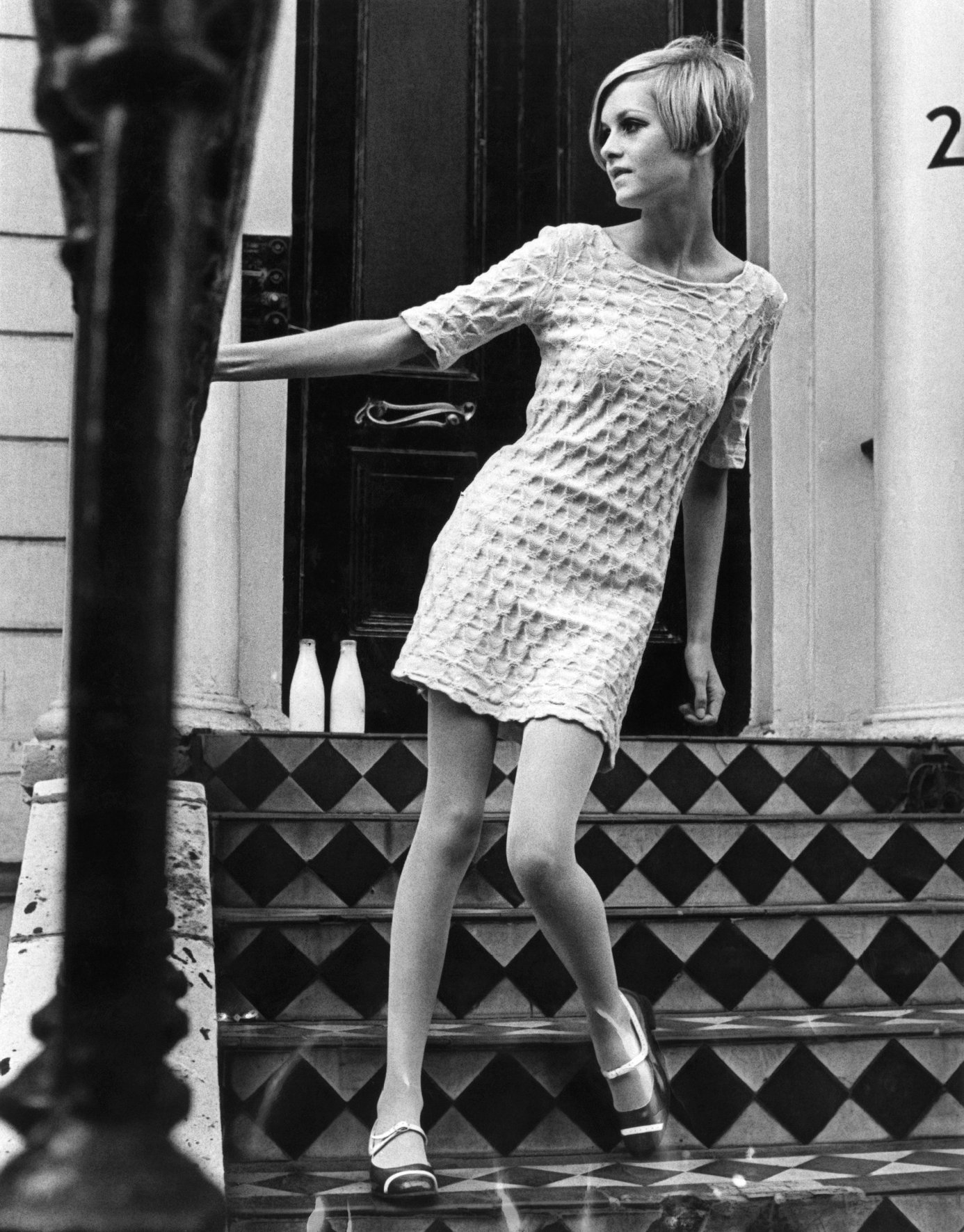
The name meant "thin and fragile," and before long it described not just one teenager from London but an entire generation's idea of beauty. Twiggy — born Lesley Lawson, née Hornby, on 19 September 1949 — became the face of the 1960s before she could legally drive. In 1966, the Daily Express named her the Face of the Year, and by the following year her fame had spread across France, Japan, and the United States. She appeared on covers of Vogue and The Tatler, photographed by Helmut Newton and Cecil Beaton. Some fashion historians still argue she was the first supermodel.
The pseudonym arrived before the fame, attached to a haircut. At 16, Twiggy met hairdresser Leonardo and became the face of his London salon. Photographer Barry Lategan shot her first session and came up with the name that would replace Lesley Hornby in headlines worldwide. The look was stark: enormous eyes, long lashes, cropped hair. It read as androgynous, futuristic, almost alien against the polished femininity of the previous decade. Mod culture claimed her instantly — she was the visual answer to the sharp suits, scooters, and amphetamine tempo of mid-1960s Britain.
The rise of Twiggy syndrome
The reaction scaled from admiration to pathology with alarming speed. Millions of young women copied her makeup and haircut, but the imitation went deeper than cosmetics. Doctors began documenting what they called Twiggy syndrome — girls dieting themselves into exhaustion, chasing a frame that measured nothing like the average teenage body. The term stuck because the phenomenon was real: a single image, repeated across magazines and television, could reshape what thousands of young women considered acceptable. Fashion had always influenced bodies; Twiggy's image made the influence visible in emergency rooms.
Fashion had always influenced bodies; Twiggy's image made the influence visible in emergency rooms.
By 1967, the fame was global. She worked as a model in France, Japan, and the United States, and the British press had already named her Woman of the Year. The title sat strangely on someone still in her teens, but the industry treated her as a veteran. Photographers competed to frame the same features that had once seemed unconventional — the wide eyes, the boyish crop, the slender limbs. What had started as a salon promotion in a London hairdresser's shop had become, in under two years, a defining image of British culture.
A second career in film
Then, in 1970, Twiggy announced she was done with modelling. She was 21 years old in a profession that had already exhausted its vocabulary for her. The decision looked like an ending, but it cleared space for a second career that few teenage models of the 1960s managed to build. In 1971, she took a role in Ken Russell's The Boy Friend and won two Golden Globes for it. The girl whose face had sold magazines was now being judged on timing, delivery, and presence — and the awards suggested she had all three.
Theatre followed film. In 1983, Twiggy made her Broadway debut in the musical My One and Only, earning a Tony nomination for her performance. She hosted her own television show, Twiggy's People, interviewing celebrities under her own name and on her own terms. Later, she sat as a judge on America's Next Top Model, evaluating young women chasing the kind of career she had walked away from decades earlier. The irony was not lost on viewers, but she approached the role without nostalgia or self-importance.
Her 1998 autobiography, Twiggy in Black and White, became a bestseller, and in 2005 she returned to modelling for Marks and Spencer. The comeback made sense: the department store wanted a face that carried British cultural memory, and no one in the industry held more of it. In 2018, she became a Dame Commander of the Order of the British Empire. The honour recognised a career that had started with a haircut and a made-up name, then sprawled across fashion, film, theatre, television, and publishing.
What lingers is the speed of it all. Between 1966 and 1970, Twiggy went from a London salon to worldwide recognition, from a nickname invented by a photographer to a medical term for eating disorders. The 1960s compressed entire careers into a few years, and she was one of the few who emerged from that compression with a second act intact. The 77th anniversary of her birth in 2026 lands in a world still arguing about body image, still copying faces from screens, still naming syndromes after the women who appear in them.
Ask anyone who lived through it, and they will describe the first time they saw her — on a magazine cover, on television, in a shop window. The image hit like a new accent: instantly recognisable, impossible to unhear. Twiggy never had to say much. The eyes did the talking, and the haircut did the rest.