
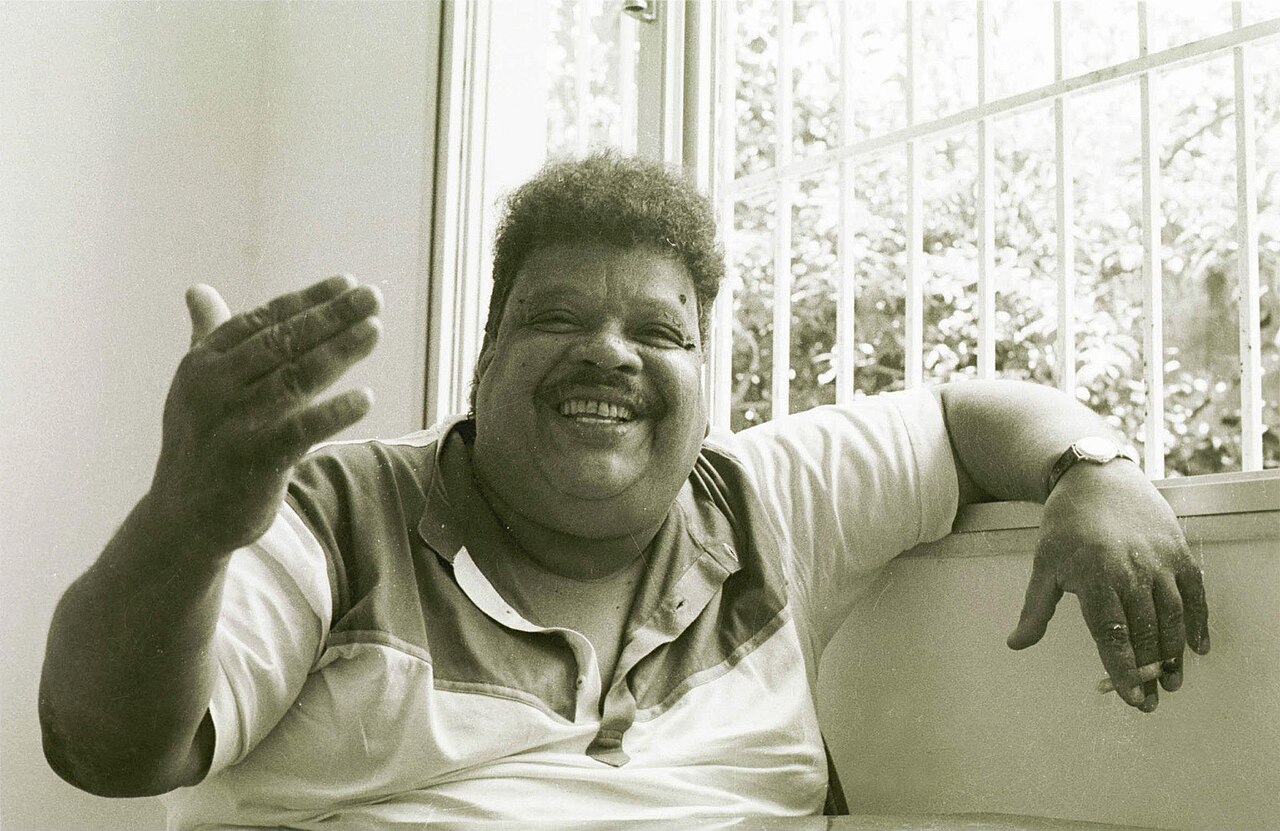
Nineteen children, one household in Tijuca, and the second boy in line started humming melodies before he could properly hold a conversation. That detail alone explains a lot about Tim Maia, born Sebastião Rodrigues Maia on September 28, 1942, in Rio de Janeiro's northern zone. The crowded rooms of his childhood left no space for hesitation, and his music never learned the art of whispering. By the time he became one of Brazil's most recognizable voices, the directness was already baked in.
Soul's forceful arrival
What he brought to Brazilian music had no polite precedent. Maia introduced soul to a scene that had been gliding on bossa nova's gentle currents, and he did it with the force of someone kicking down a door. His sound pulled together samba, funk, and rock and roll, then pushed them through a voice that could swing from tender romance to sarcastic growl within a single phrase. The irony and humor were not decoration; they were the engine.
Alongside Jorge Ben, Maia became a pioneer of samba-rock and samba-funk, two hybrid forms that reshaped how Brazilian audiences understood rhythm. The partnership was less a formal collaboration than a shared instinct: both men heard the same possibilities in the collision of Afro-Brazilian percussion and North American groove. Maia's version leaned harder into the grit, the sweat, the unapologetic swagger of someone who had absorbed rhythm and blues and disco without ever sounding like an imitator.
A catalog without borders
His catalog sprawled across genres that would have broken a lesser artist. Soul, funk, romantic ballads, samba, bossa nova, baião, MPB, rock and roll, rhythm and blues, disco — Maia recorded all of it, often on the same album, sometimes within the same side of vinyl. The stylistic range was not dilettantism. It was the sound of a man who refused to be confined by anyone's definition of what a Brazilian musician should be.
The business side mattered too. Maia was not just a songwriter and performer; he ran his own label, Vitória Régia Discos, and treated music as both art and commerce. That entrepreneurial streak gave him control over his recordings and a reputation for being difficult in the best possible way. He toured relentlessly, recorded constantly, and accumulated thirteen Brazilian music awards across a career that spanned decades without ever settling into comfortable nostalgia.
The iconoclast's humor
The iconoclasm was real, not a marketing pose. Maia said what he thought, mocked what deserved mocking, and wrote songs that could make you laugh and ache in the same breath. Brazilian audiences recognized something rare: a star who refused to perform humility. His humor cut through the pretension that often surrounded MPB, and his irony made the romantic ballads hit harder because you knew the same voice could demolish sentimentality a track later.
When Maia died on March 15, 1998, the silence lasted only until someone put on a record. His recorded legacy kept selling, kept getting reissued, kept finding new listeners who had never seen him live. The music outlasted the man because it had never depended on his physical presence. It depended on the songs, the arrangements, and that voice — unmistakable, unbothered, completely sure of itself.
In 2012, Rio de Janeiro staged a theatrical retrospective of his career called Vale Tudo, a musical that turned his life into a spectacle fourteen years after his death. The title fit perfectly: anything goes, no rules, full commitment. Audiences came to hear the songs they already knew and left with a sharper sense of the man behind them. The production confirmed what record collectors had long understood — Maia's catalog rewards repeated listening.
Eighty-four years after that September day in Tijuca, the second of nineteen children still sounds like no one else. The melodies he began composing as a child became a body of work that reshaped Brazilian popular music and gave soul a permanent home in the country's sonic vocabulary. Nineteen children, one voice. The math never made sense, which is exactly why it worked.