
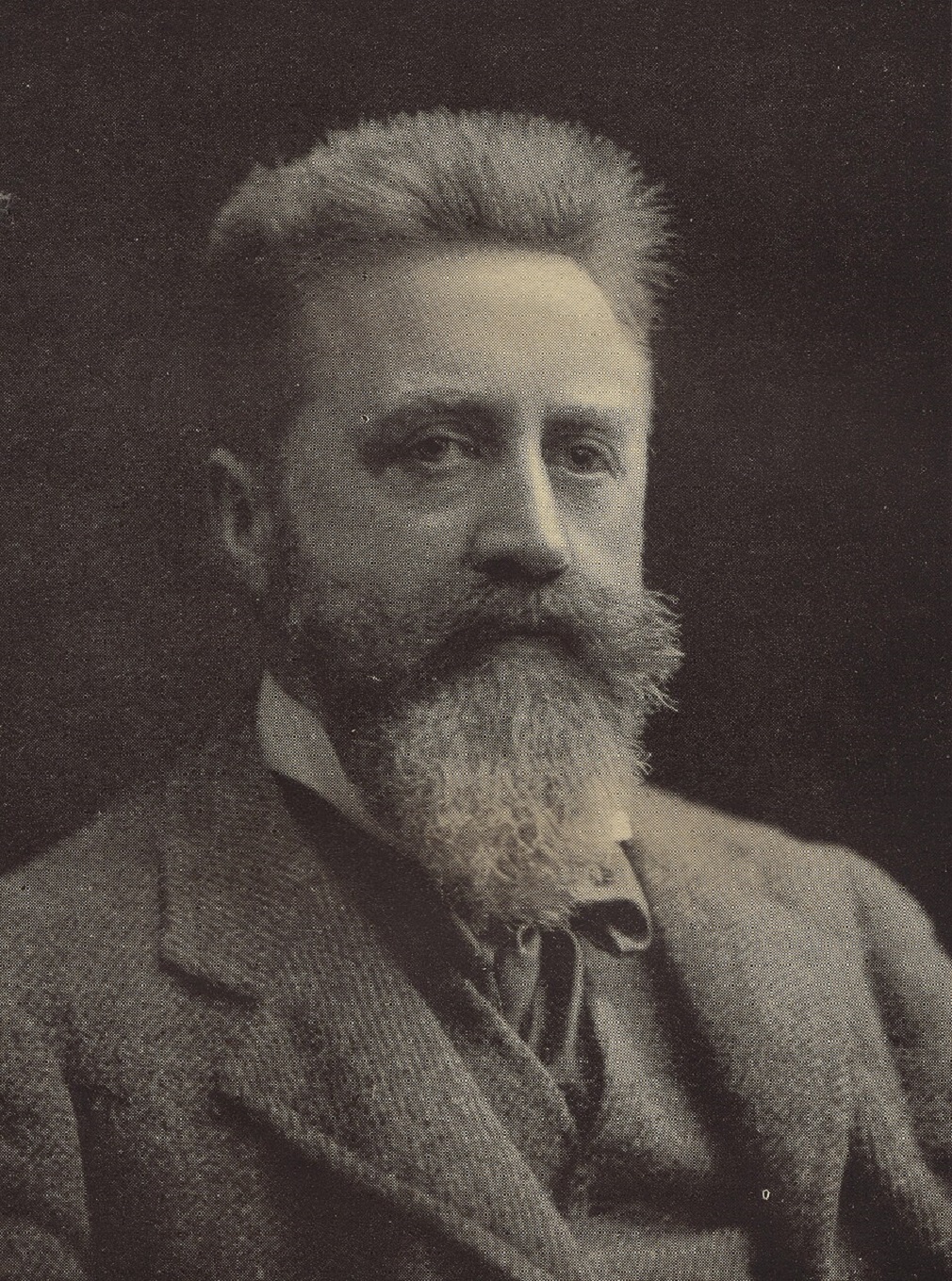
A young man with weak health and a family plan for service in India walks into the library of the South Kensington Museum. He is not looking for music. He is studying chemical engineering, a compromise his parents accepted when the colonial route proved too risky. But the manuscripts he finds there, the handwriting of composers long gone, do something to him. The young man is Granville Bantock, and within a few years he will be a composer, conductor, and the force behind an entire city's orchestra. Bantock died on October 16, 1946.
From chemistry to the Royal Academy
The pull was immediate and irreversible. At twenty he enrolled at the Royal Academy of Music, where he studied harmony and composition under Frederick Corder. His father, a distinguished Scottish surgeon, had wanted a secure, respectable career for his son. Instead, Bantock threw himself into music with the energy of someone making up for lost time. He won the Macfarren Prize in his first year, and soon he was publishing a music journal, the New Quarterly Musical Review, which he ran for several years.
The real turning point came not in London but on the coast. From 1897 to 1901, Bantock conducted the orchestra at the New Brighton Tower, a seaside pleasure palace near Liverpool. There he learned what an orchestra could do, night after night, for audiences who came for entertainment and left having heard something deeper. He programmed ambitious music and built a following. The job taught him how to lead, how to persuade, and how to make a large ensemble sound alive.
Building Birmingham's orchestra
That experience carried him to Birmingham, where from 1900 he directed the music school at the Birmingham and Midland Institute. He did not just teach. He agitated for a permanent city orchestra, and he got one. The City of Birmingham Orchestra, later the City of Birmingham Symphony Orchestra, gave its first concert in September 1920, and the programme opened with Bantock's own overture Saul. He had not only founded the ensemble; he had written the music to launch it.
He had not only founded the ensemble; he had written the music to launch it.
Bantock's own compositions drew on the folklore of the Hebrides and the harmonic world of Richard Wagner. He loved the exotic, the vast, the strange. His choral epic Omar Khayyám, written between 1906 and 1909, set the Persian poet's verses for huge forces. His overture Pierrot of the Minute and the Pagan Symphony, from 1928, show a composer unafraid of colour and scale. He wrote operas too, including The Pearl of Iran and The Sea Maiden.
Championing Sibelius and Elgar
He was also a champion of other people's music. Early in the century he promoted the Finnish composer Jean Sibelius, whose music was then little known in Britain. The friendship ran deep: Sibelius dedicated his Third Symphony to Bantock and later became the first president of the Bantock Society, founded soon after the English composer's death. Edward Elgar, whom Bantock succeeded as Peyton Professor of Music at Birmingham University, dedicated one of his Pomp and Circumstance marches to him.
By the time Bantock died in 1946, his reputation had begun to fade. The grand, colourful style he loved had fallen out of fashion. But the recordings tell a different story. Since the 1990s, the label Hyperion has released many of his works, and the complete cycle of his symphonies has been recorded by the Royal Philharmonic Orchestra under Vernon Handley. Listeners who come to Bantock cold often find themselves surprised by the sheer sweep of the music.
He was cremated at Golders Green Crematorium in London, the city where he was born. The boy who was meant to administer an empire instead built an orchestra, wrote operas and symphonies, and gave Birmingham a musical identity it had never had. The manuscripts he found in that museum library did not just change his life; they changed the sound of a city for generations.