
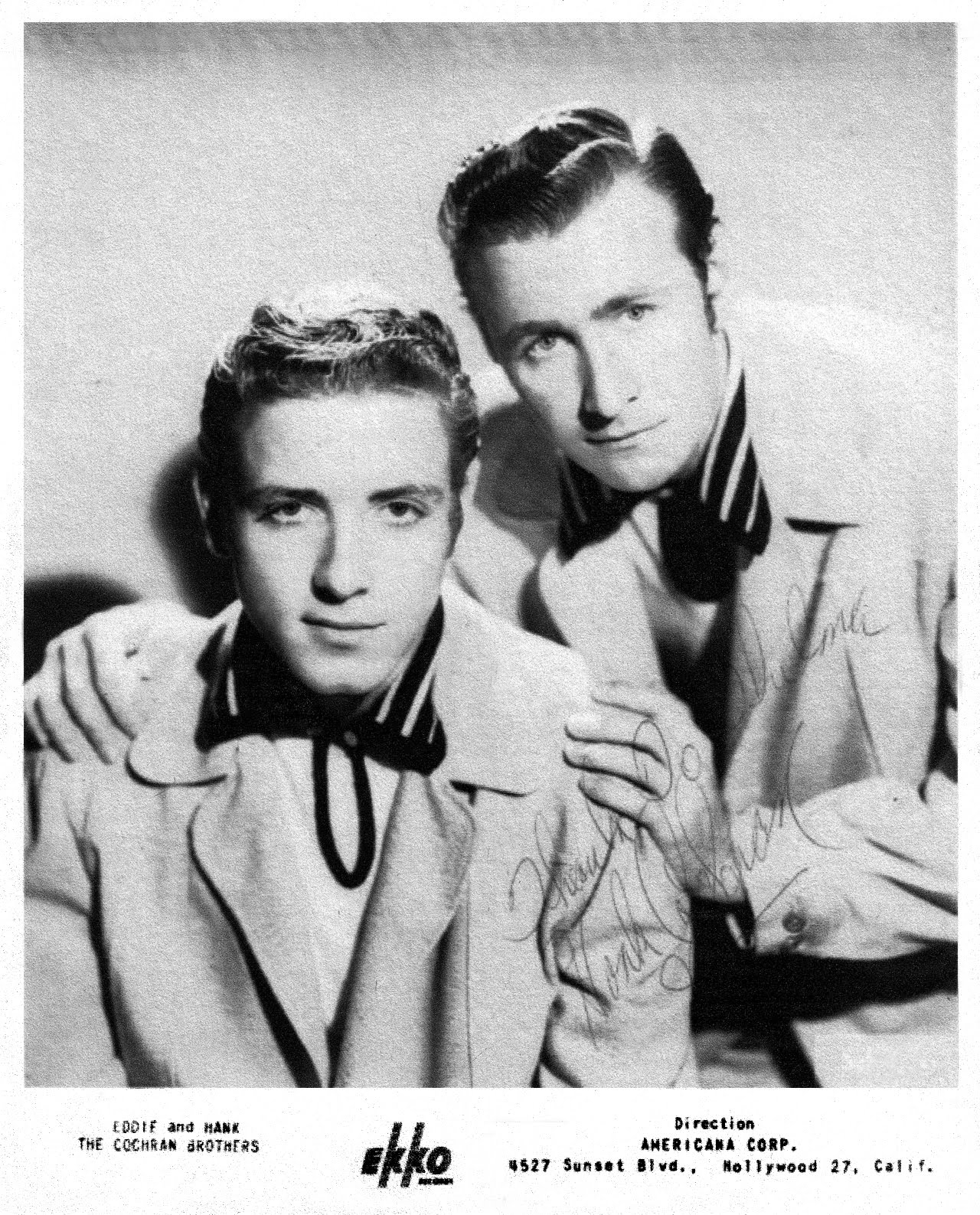
On a spring night in 1960, a Ford Consul Mark II slammed into a concrete lamppost on Rowden Hill in Chippenham, England. Inside were American rock and roll singer and guitarist Eddie Cochran, his tour partner Gene Vincent, his fiancée Sharon Sheeley, and their tour manager. Cochran, in the middle of the back seat, threw himself over Sheely to shield her from the impact.
The young man from Albert Lea, Minnesota, born Edward Raymond Cochran, had already done more in a few years than most musicians manage in a lifetime. He was one of the pioneers of rock and roll and rockabilly, a style that blended country twang with the raw energy of early rock. But on that road in Wiltshire, his story came to a sudden end.
Breakthrough and Liberty Records
Cochran's break came in 1956, when he appeared in the film The Girl Can't Help It and performed 'Twenty Flight Rock' on screen. That one song caught the attention of a teenage Paul McCartney, who later used it to audition for John Lennon's group The Quarrymen. Soon after, Cochran signed with Liberty Records, where his first hit, 'Sittin' in the Balcony', climbed to number 18 on the Billboard chart.
But the label wanted something softer. His only studio album released during his lifetime, Singin' to My Baby, was stacked with pop ballads backed by an orchestra and a choir, a decision forced by Liberty's management. Cochran went along with it, but he was already experimenting in the studio with multitrack recording, distortion, and sound layering, techniques that would shape his harder, more distinctive sound.
Summertime Blues and the hits
That sound exploded in 1958 with 'Summertime Blues', written with Jerry Capehart. The song reached number 8 on the chart and became a rockabilly classic, its frustrated teenage narrator complaining about a summer job and a boss who won't let him use the car. A year later came 'C'mon Everybody' and 'Somethin' Else', songs that cemented his reputation as a sharp songwriter and a guitarist with a gift for a driving riff.
Cochran modified his electric guitars, favouring a Gretsch 6120, and played bass, piano, and drums on his own records. He was a studio craftsman as much as a performer, and his influence stretched far beyond his own short recording career. The Beatles, Led Zeppelin, The Beach Boys, The Who, Sex Pistols, and Stray Cats all covered his songs, drawn to the economy and punch of his writing.
He was a studio craftsman as much as a performer, and his influence stretched far beyond his own short recording career.
The final British tour
In January 1960, Cochran arrived in Britain for a tour with Gene Vincent, organised by promoter Larry Parnes. British audiences adored him, often more than American ones did. The tour ran for months, with Cochran playing to packed halls and winning over a country that would claim him as one of its own. By April, the end was in sight.
After a show in Bristol on April 16, the taxi carrying Cochran and his companions crashed on the way back to London. Cochran suffered a severe head injury and died the next day in hospital in Bath without regaining consciousness. He was 21 years old. The driver, a 19-year-old named George Martin, was convicted of dangerous driving, fined 50 pounds, and banned from driving for 15 years.
Eddie Cochran's grave lies in Forest Lawn Memorial Park in Cypress, California, a long way from the English road where his life ended. Most of his recordings were released after his death, and in 1987 he was inducted into the Rock and Roll Hall of Fame. The boy from Minnesota had packed a whole career into a handful of years, and the songs he left behind still sound like the beginning of something.