
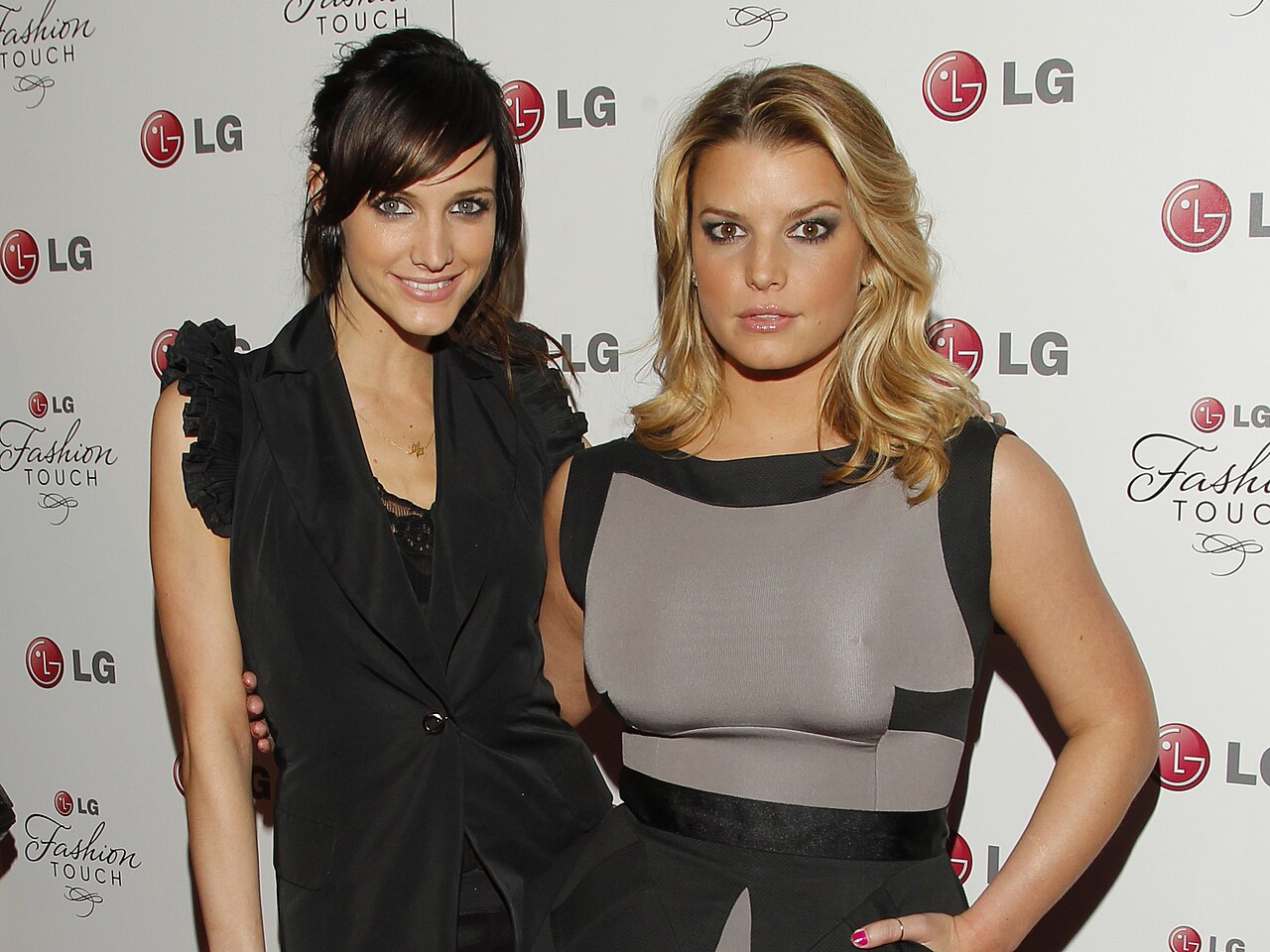
A girl in a leotard stands at the barre, younger than anyone else in the room. Ashlee Simpson was born in Waco, Texas, and by the age of three she was already training in classical ballet. That discipline carried her to the School of American Ballet in New York, where she arrived as the youngest student in the institution's history. The future pop star was being shaped not by microphones and stage lights, but by mirrors and repetition.
From ballet studio to Geffen Records
Then the path bent. At nineteen, Ashlee Simpson signed with Geffen Records, leaving the ballet studio behind for a recording booth. Her debut single, "Pieces of Me," shot into the top five of the Billboard Hot 100 and topped the Mainstream Top 40 chart. The song earned a gold certification from the RIAA. Suddenly a former dancer was singing her own words to millions.
Her first album, Autobiography, arrived that July and opened at number one on the Billboard 200. Nearly 398,000 copies sold in the first week alone. Simpson co-wrote every song on the record, a point she emphasized in interviews. By early the next year, more than five million copies had sold worldwide. The reality show The Ashlee Simpson Show, airing on MTV, documented the making of the album and turned her into a familiar face beyond the music.
The Saturday Night Live walk-off
Then came the night that rewrote the narrative. On October 23, during a live performance on Saturday Night Live, Simpson began to sing her song "Autobiography." The backing track that kicked in was "Pieces of Me," her earlier hit. She froze, then walked off the stage. The cameras kept rolling.
The backlash was immediate. Simpson was criticized for using a pre-recorded vocal track, a practice common in the industry but rarely exposed so publicly. The show's producer, Lorne Michaels, said he had no idea a backing track would be used and called her the only musical guest to walk off mid-performance during a live broadcast. What had been a technical error became a story about authenticity.
Return, recovery and the shifted conversation
She returned to Saturday Night Live a year later and performed two songs, "Boyfriend" and "Catch Me When I Fall," without incident. But the shadow of that first appearance lingered. Her second album, I Am Me, still debuted at number one on the Billboard 200, moving 220,000 copies in its opening week. The first single, "Boyfriend," reached the top twenty of the Hot 100. The music kept selling, but the conversation had shifted.
By the end of that year, the strain showed. After a performance in Japan, Simpson collapsed from exhaustion and was hospitalized. The girl who had once been the youngest dancer at a prestigious ballet school had spent two years sprinting through albums, tours, television, and public scrutiny. The incident on live TV was only a few minutes, but it framed everything that followed.
Ashlee Simpson's story is not simply one of a stumble on a famous stage. It is the story of a performer trained from childhood to be polished, suddenly exposed in a moment of broken machinery. The microphone was live, the track was wrong, and the dancer who had learned to control every movement could not control what the audience heard.
The microphone was live, the track was wrong, and the dancer who had learned to control every movement could not control what the audience heard.