
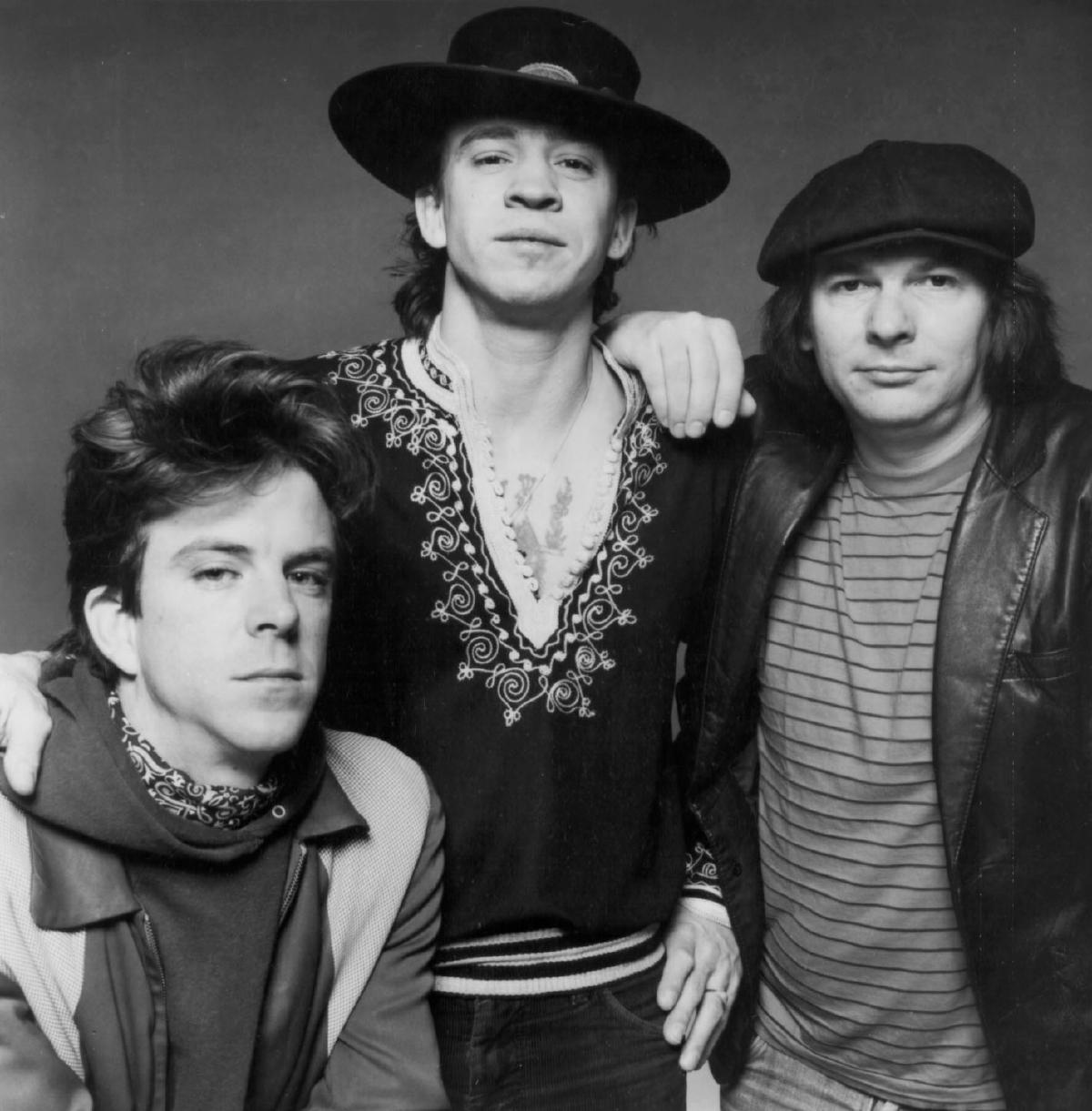
A seven-year-old boy in Dallas unwraps a toy guitar and treats it like a real instrument. By his teens he has quit school and moved to Austin, unable to read a single note of music but able to make a Fender Stratocaster roar like a Texas thunderstorm. This is Stevie Ray Vaughan, the guitarist who would drag the blues back into the mainstream.
From Dallas to Double Trouble
The toy was a gift, but the obsession was his own. Vaughan learned everything by ear, copying licks from records until they lived in his fingers. He dropped out of school in 1972 and went to Austin, a city where a young player could find late-night jams and cheap rent. By 1978 he had formed the trio Double Trouble with bassist Tommy Shannon and drummer Chris Layton, a band built for sweat and volume.
The name Double Trouble came from an Otis Rush song, and the group carried that warning honestly. Vaughan's playing was ferocious, but his life was sliding. He was arrested for cocaine possession in 1980 and put on probation, confined to Texas at first. The restriction was later lifted so he could tour, but the habit followed him onto the road.
Montreux, Bowie, and Let's Dance
Then came a booking that should have been a small one: the Montreux Jazz Festival in the summer of 1982. Double Trouble played loud, raw Texas blues to a crowd expecting something smoother. Some people booed. But in that audience sat David Bowie, who heard something he needed and invited Vaughan to play on his next album, Let's Dance. That record became a global smash, and Vaughan's guitar was suddenly everywhere.
But in that audience sat David Bowie, who heard something he needed and invited Vaughan to play on his next album, Let's Dance.
The attention led to a deal with Epic Records, and the debut Texas Flood arrived in 1983. It sold fast, made blues-rock feel urgent again, and turned Double Trouble into headliners. More albums followed: Couldn't Stand the Weather, Soul to Soul, a live set. But the success did not quiet the addiction. By the middle of the decade, Vaughan was using alcohol and drugs heavily, and the band's schedule was tearing apart.
Rehabilitation and In Step
He entered rehabilitation in 1986 and came out clean, then rebuilt the band and his own playing. The album In Step, released in 1989, reached number 33 in the United States, and the single Crossfire became his only number-one hit. That same year he headlined Madison Square Garden. The boy with the toy guitar was now one of the biggest guitarists in the world.
In the summer of 1990, Vaughan recorded Family Style with his older brother Jimmie, the first album they made together. A month later, on August 27, Vaughan boarded a helicopter after a show in Wisconsin. It crashed into a hillside near East Troy, killing everyone on board. The pilot's error was later named as the cause. Vaughan was 35 years old.
The impact of his death was immediate and lasting. More than 15 million of his albums have sold in the United States. Texas named October 3 Stevie Ray Vaughan Day, and in 2015 he was inducted into the Rock and Roll Hall of Fame with Double Trouble. Rolling Stone has twice placed him among the twenty greatest guitarists of all time.
He never learned to read music. He never finished school. What he had was a Stratocaster, a wah-wah pedal, and a sound that could shake a festival crowd into silence or fury. The toy guitar from Dallas became one of the most recognizable voices in American music, and it went quiet far too soon.