
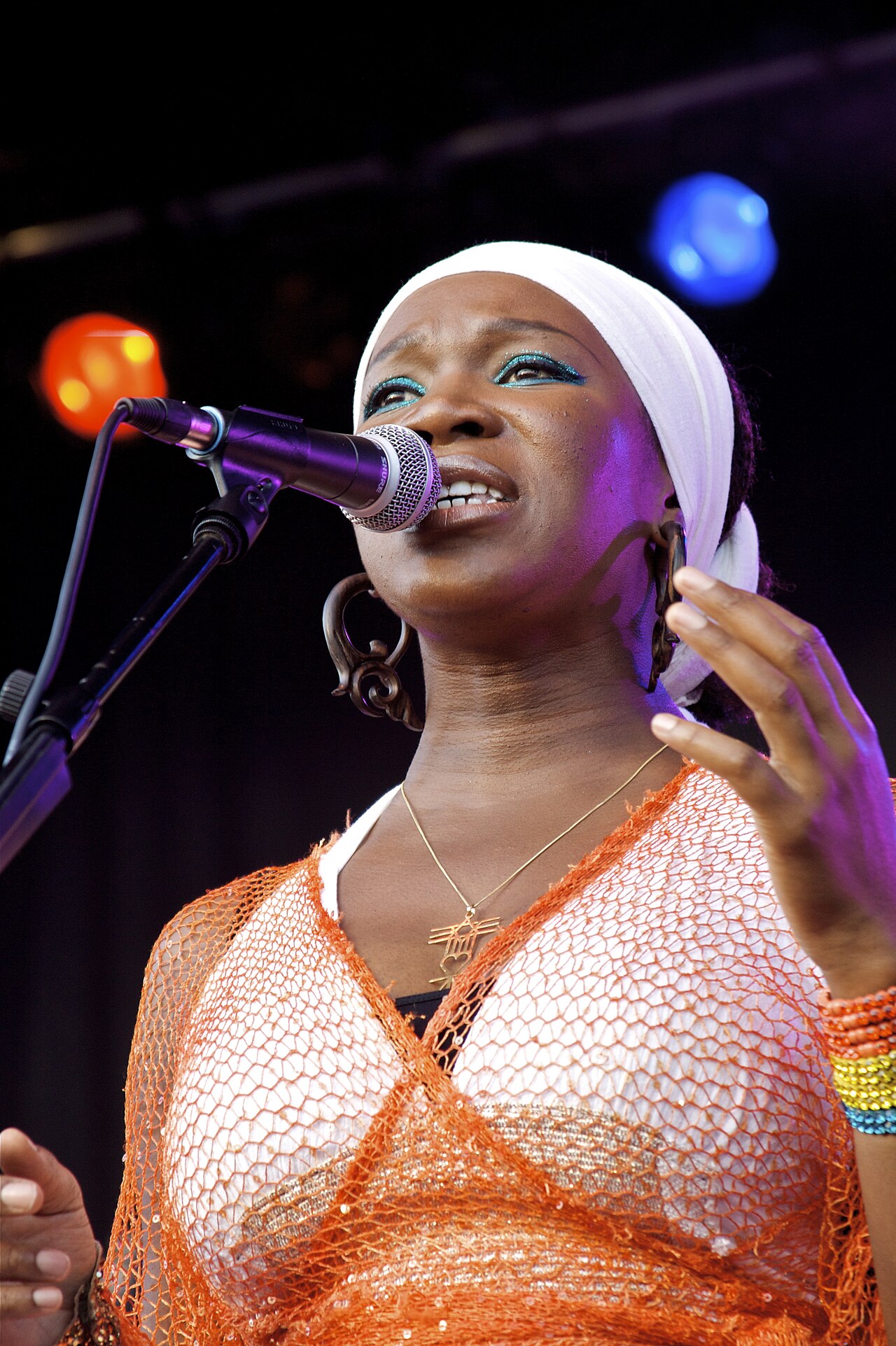
The song was called “Video,” and it was the opposite of everything pop radio wanted in the early 2000s. No glossy production, no choreography, no apology. Just India.Arie, an American singer, songwriter and producer from Atlanta by way of Denver, strumming an acoustic guitar and telling millions of listeners that she was fine exactly as she was. The record arrived on March 27, 2001, as the lead single from her debut album Acoustic Soul, and it landed like a quiet detonation.
Denver roots and Atlanta soil
India.Arie was born India Arie Simpson on October 3, 1975, in Denver, Colorado. Her mother Joyce had been a singer herself, signed to Motown as a teenager and opening shows for Stevie Wonder and Al Green. After her parents divorced, Joyce moved the family to Atlanta when India was 13. That city became the soil for everything that followed: she picked up the guitar while studying at the Savannah College of Art and Design, and later helped found an independent Atlanta collective called Government Earthseed.
The path to a major label was not a straight line. She played the second stage at Lilith Fair in 1998, a festival built on the idea that women with acoustic instruments could headline. A year later, a scout for Universal/Motown heard something in her voice and introduced her to Kedar Massenburg, the former CEO of Motown. The label signed her, and Acoustic Soul arrived in the spring of 2001. It opened at number 10 on the Billboard 200 and number 3 on the R&B chart, eventually selling more than two million copies in the United States and three million worldwide.
Seven nominations, zero wins
The industry responded with an avalanche of attention. At the Grammy ceremony in 2002, India.Arie received seven nominations, including major categories. She lost all seven, five of them to Alicia Keys. It was the kind of sweep that turns an awards show into a coronation for one artist and a public shrug for another. But the producers had already made a decision: India.Arie would close the broadcast. She walked out and sang “Video” in front of the same room that had just passed her over.
That performance became the story. Viewers who had never heard Acoustic Soul saw a woman in braids and a simple shirt, playing her own song with no gimmick between her and the audience. The single had already climbed to number 47 on the Hot 100, her highest placement on that chart. After the Grammys, the song belonged to a larger argument about what R&B could be in an era of polished pop and hip-hop crossover. India.Arie was not chasing the center of the mainstream; she was building a different room.
India.Arie was not chasing the center of the mainstream; she was building a different room.
Voyage to India and two trophies
The follow-up proved the debut was not a fluke. Voyage to India arrived in the fall of 2002 and debuted at number 6 on the Billboard 200, selling 109,000 copies in its first week and topping the R&B album chart. A year later, the Grammys corrected course: the album won Best R&B Album, and the single “Little Things” won for Best Urban/Alternative Performance. The same institution that had shut her out now handed her two trophies, as if acknowledging that the room she had built was now too large to ignore.
What made India.Arie different was never just the guitar. It was the refusal to separate her sound from her sense of self. Her mother had sung for Motown, but the daughter did not audition for that legacy; she rewrote it. Acoustic Soul sold double platinum in the United States and went gold in the United Kingdom and platinum in Canada, but the numbers only tell part of the story. The other part is the image of a young Black woman in the early 2000s, holding an acoustic guitar on a major label, and telling the camera that she was not the average girl from your video.
The seven nominations that became zero wins could have been the end of the narrative. Instead, India.Arie turned the loss into the opening scene of a longer career. She closed that Grammy night with “Video,” and the song’s message outlasted the snub. The moment did not make her a star; it revealed that she already was one, standing in the middle of the industry’s biggest stage, playing her own chords, and refusing to flinch.