
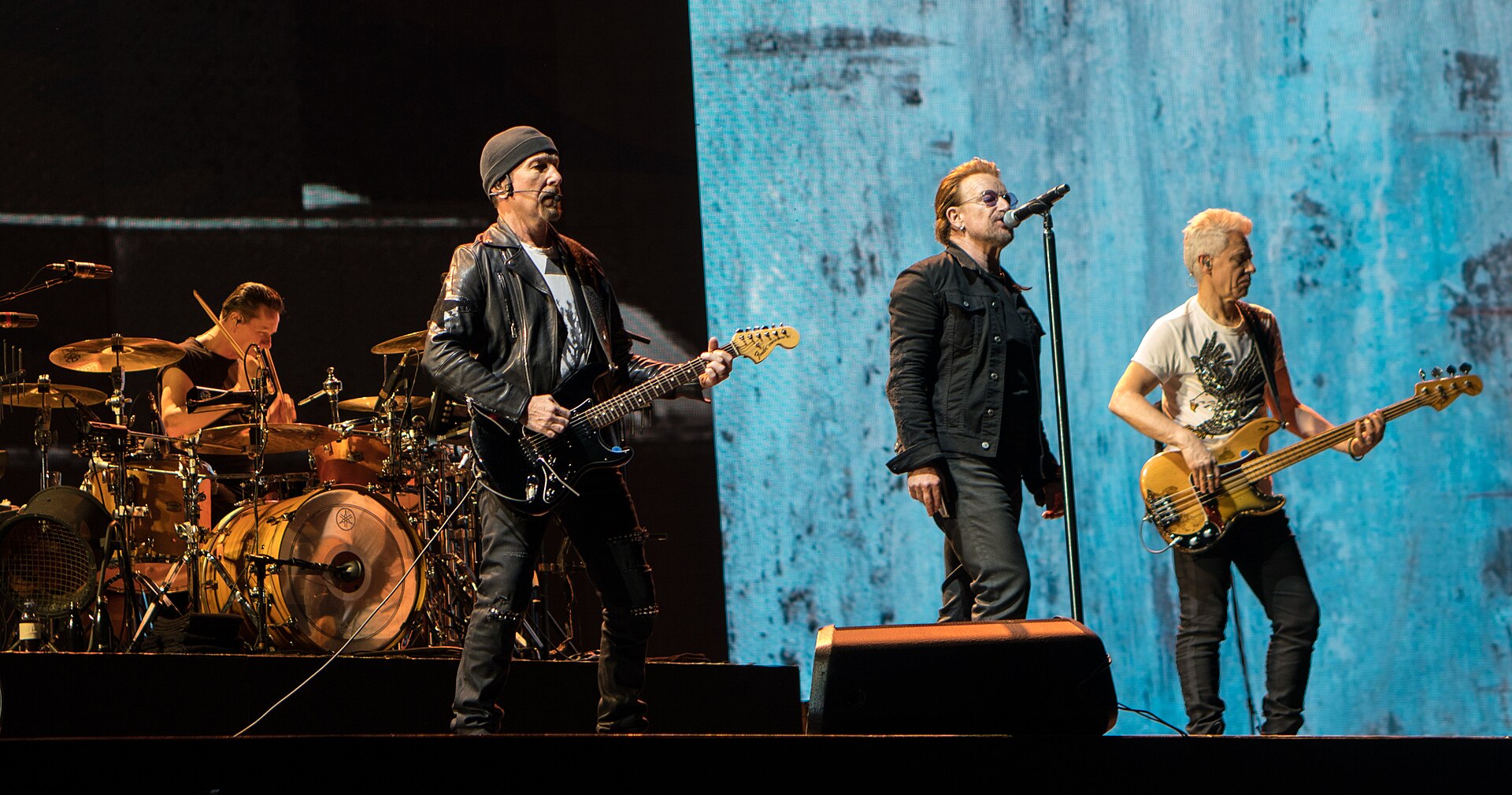
A thousand numbered 12-inch records, sold before anyone outside Ireland could hear them. That was the strange debut of a Dublin band that had already burned through two names and a school talent show just to get this far. U2 released their first record, the three-song EP U2-3, on 26 September 1979, and the pressing vanished from shops with a speed no Irish 12-inch had managed before.
From school notice to Feedback
The quartet behind those thousand copies had spent three years becoming U2. Larry Mullen Jr. posted a notice at Mount Temple school in 1976, and the first rehearsal happened on his kitchen floor on 25 September of that year. Bono, the Edge, Adam Clayton, Mullen, plus Dick Evans and Ivan McCormick formed the original lineup under the name Feedback. A paid school gig at St. Fintan's followed in April 1977, by which point they were calling themselves The Hype.
The name U2 arrived in March 1978, chosen from six options Steve Averill put forward. That same month Dick Evans left after a farewell show at the Presbyterian Hall in Sutton. A few days later, on 18 March, the band won the Pop Group '78 talent contest in Limerick. The prize: 500 pounds and a demo session for CBS Ireland, which they recorded at Keystone Studios in Dublin that April.
Hot Press journalist Bill Graham connected the band with Paul McGuinness, who became their manager in mid-1978. A year later U2 were playing daytime shows at the Dandelion Market, and by August 1979 they had recorded demos at Windmill Lane Studios with producer Chas de Whalley. That session hardened into the three tracks that would become U2-3: Out of Control, Stories for Boys, and Boy/Girl.
The EP itself was a deliberately local artifact. U2 and Chas de Whalley shared production credit, and the record was available only in Ireland. All thousand numbered copies sold immediately, which made U2-3 the fastest-selling 12-inch release in Irish history at that point. The band had no international label, no London bookings yet, just a homegrown audience that had watched them evolve from school hall covers into something sharper.
All thousand numbered copies sold immediately, which made U2-3 the fastest-selling 12-inch release in Irish history at that point.
London and the Island deal
London came in December 1979, when U2 played their first shows outside Ireland. The follow-up single Another Day arrived on 26 February 1980, again Ireland-only. That same day the band played the National Stadium in Dublin, a 2000-capacity room, where Island Records representative Bill Stewart offered them a contract. By March the deal was signed: four albums, with an advance of 50,000 pounds plus another 50,000 for touring.
The first international single, 11 O'Clock Tick Tock, appeared in May 1980 and missed the charts entirely. But the debut album Boy, recorded from July to September 1980 at Windmill Lane, gave producer Steve Lillywhite room to experiment. Mullen's drums were set up in a stairwell, and the sessions incorporated breaking bottles and cutlery striking a spinning bicycle wheel. The cover was a close-up of teenager Peter Rowen.
I Will Follow became the first U2 song to reach American radio rotation, and a US tour in March 1981 brought an unexpected loss: Bono's briefcase, containing lyrics and song ideas, disappeared. The follow-up album October arrived that same year after a rushed recording in July and August, with the single Fire giving the band their first UK chart entry. Anton Corbijn entered their orbit during the October tour, and in March 1982 they played 14 support slots for the J. Geils Band.
By the time War was being written, the band rented a cottage in Howth to live and rehearse together. The Edge spent two weeks alone composing in August 1982, producing material that reshaped the album. War was recorded at Windmill Lane from September to November 1982 with violinist Steve Wickham and vocalists from Kid Creole and the Coconuts. The thousand-copy EP that started it all had become a footnote, but a precise one: three songs, one island, no leftovers.