
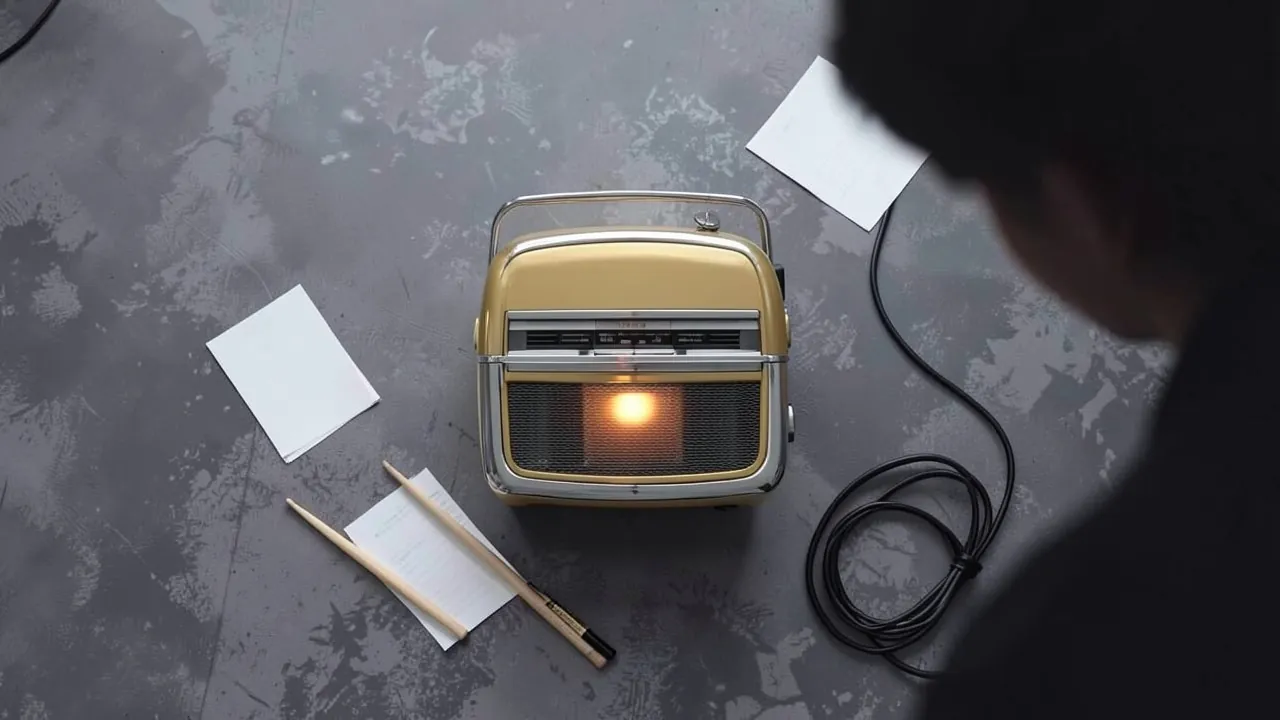
The tape machine sat in a coffee plant in Daly City, a four-track Ampex bought with money from a dead aunt. Lindsey Buckingham, a young guitarist who had never taken a lesson and could not read music, was there with his girlfriend Stevie Nicks, recording seven demos that would become their audition for a record deal. The year was 1972, and the pair had already been dropped by one label after their debut album sold poorly. They were broke, unknown, and making music in the family coffee factory because it was free.
Early self-reliance and the Buckingham Nicks duo
Buckingham had been playing since he was a kid, when his parents noticed his ear and bought him a Harmony guitar for thirty-five dollars. He learned folk songs off records by ear, copying banjo and guitar parts without any teacher. That stubborn self-reliance would define everything about him: he trusted his fingers, his instincts, and his refusal to do things the usual way. By the early 1970s, he and Nicks were a duo called Buckingham Nicks, signed to Polydor Records. The label dropped them almost immediately after the album flopped.
The break came by accident. Mick Fleetwood, drummer of the British-American band Fleetwood Mac, was in Sound City studio and heard a song called Frozen Love from the Buckingham Nicks album. He wanted to know who played that guitar. Soon after, Buckingham and Nicks happened to be in the same studio recording demos, and Fleetwood introduced himself. Within weeks, the band's guitarist quit, and Fleetwood offered Buckingham the job. That was the moment the story could have ended. Buckingham said he and Nicks were a package: no her, no him.
Fleetwood agreed to take both of them without an audition. That single condition set the terms for everything that followed. The next Fleetwood Mac album, released in 1975, went to number one in America, and Buckingham's songs Monday Morning and I'm So Afraid helped define the new sound. But the real storm came with the next record, Rumours, which sold more than forty million copies worldwide. While the band was recording it, Buckingham and Nicks broke up. The album became a global phenomenon, built largely on songs written by people falling apart in the studio.
Fleetwood agreed to take both of them without an audition. That single condition set the terms for everything that followed.
Tusk and the home-recording experiment
Buckingham's real power play came after Rumours. He convinced Fleetwood to let him work on tracks at home, experimenting alone, away from the band's usual process. The result was Tusk, a double album that Buckingham largely directed. It was stranger, looser, and less commercial than anything the band had done, with a marching band of more than a hundred musicians recorded at Dodger Stadium. The record baffled some fans and critics, but it proved Buckingham would not simply repeat the formula that had made Fleetwood Mac one of the biggest bands in the world.
His whole career has been a series of refusals. He refused to tour when the band demanded it and left Fleetwood Mac after their next big album. He went into a studio alone and spent five years making a solo record. He refused to join the reunion for years, then came back on his own terms. The pattern started in that Daly City coffee plant: a young man with no formal training, a cheap guitar, and a four-track machine, deciding he would make music only the way he wanted to.
Even now, Buckingham plays without a pick, his fingers pulling melodies directly from the strings in a style called fingerstyle. He has been called one of the greatest guitarists of all time, but he still cannot read music. The same stubbornness that got him into Fleetwood Mac also got him fired from it decades later. What matters is not that he joined the band, but how: by refusing to be separated from the person he loved, and by trusting his own hands over every rule the industry had.