
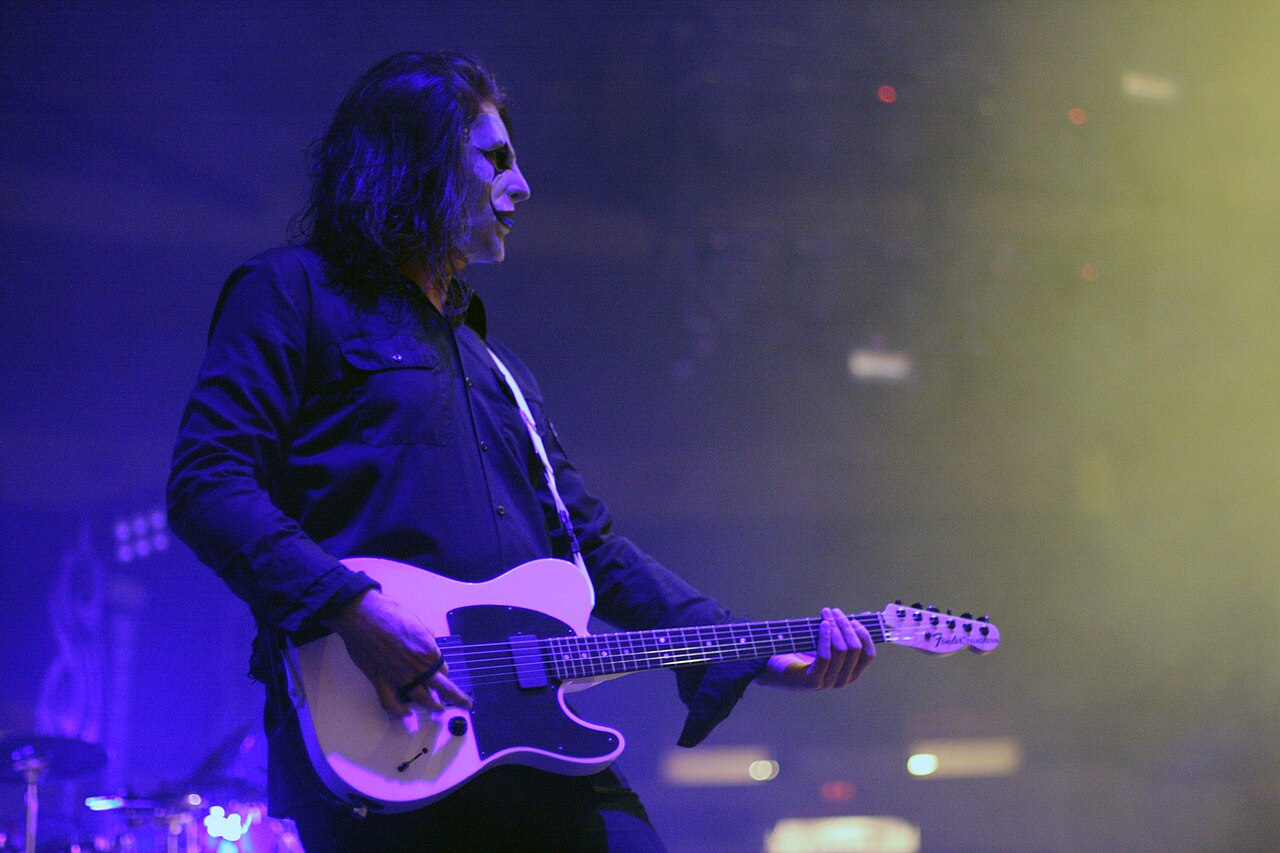
In a cramped Iowa rehearsal space in the winter of 1999, a tall guitarist picked up the phone and almost walked away from the heaviest band in America. Jim Root, born in Las Vegas on the second of October 1971, had already told Slipknot no once. The masked nine-piece from Des Moines needed a replacement for guitarist Josh Brainard, and three people pushed hard for Root: percussionist Shawn Crahan, drummer Joey Jordison, and producer Ross Robinson.
The last man into the nine
Root's hesitation made sense. He had spent years in Iowa's thrash and hard-rock trenches, and Slipknot was a different animal: nine men in jumpsuits and horror masks, a wall of percussion, a sound built to overwhelm. When he finally called back and said yes, he became the last member of the lineup that would hold together from 1999 to 2010. His number in the band was #4, stitched onto his uniform and later stamped onto his own amplifier.
The first album nearly left him out entirely. By the time Root joined, most of the debut record was already tracked. He managed to play on exactly one song, a track called Purity, which became a permanent fixture of Slipknot's live shows. He started on rhythm guitar, then moved into a co-lead role as the band's sound grew more layered. For a man who almost missed the ride, that single song became his foothold.
Height, hands and playing style
Root's physical presence set him apart from the start. At 198 centimeters, he is the tallest member of Slipknot, and he is also ambidextrous: he writes with both hands, and though he was born left-handed, he plays guitar right-handed. That unusual wiring shows in his playing, which shifts between crushing rhythm parts and sharp lead lines without losing the groove.
His gear choices became a signature. Root is a longtime Fender loyalist, drawn especially to the Telecaster, a guitar he chose after being inspired by the guitarist John 5. In the summer of 2007, Fender released the Jim Root Telecaster, and five years later Orange Amplifiers announced a signature Tiny Terror amp designed with Root. The front panel carries only his number #4 and his autograph, a stripped-down badge for a player who built his sound on simplicity and force.
Filling the gap after tragedy
The real test came after tragedy. When bassist Paul Gray died and drummer Joey Jordison left the band, Slipknot lost two of its founding writers. Root stepped into the gap and became one of the band's main songwriters. The last man in had become the man holding the center, turning riffs and structures into the spine of Slipknot's later records.
The last man in had become the man holding the center, turning riffs and structures into the spine of Slipknot's later records.
That shift changed what Slipknot sounded like. Root's writing leaned on the twin-guitar approach he had used in his other band, Stone Sour, where he usually played lead. In Slipknot, that meant tighter, more melodic guitar interplay without losing the band's brutal edge. The guy who once played on a single song was now shaping whole albums.
Root's story is a strange kind of luck: a phone call he almost didn't make, a band he almost didn't join, a debut he barely appeared on. But from that one song, Purity, he built a place at the center of one of metal's biggest bands. The number #4 on his amp is not just a rank; it is a reminder that the last man in can end up carrying the most weight.